Welcome back to this week’s Battery Business Insights article on the Future Battery Forum 2025. The 6th edition of Europe’s premier battery industry conference concluded two weeks ago in Berlin. The Future Battery Forum has established itself as a central gathering point for European battery industry stakeholders since its inception. The event’s growth trajectory mirrors Europe’s broader push to build domestic battery manufacturing capacity and reduce dependence on Asian supply chains.
By the Numbers
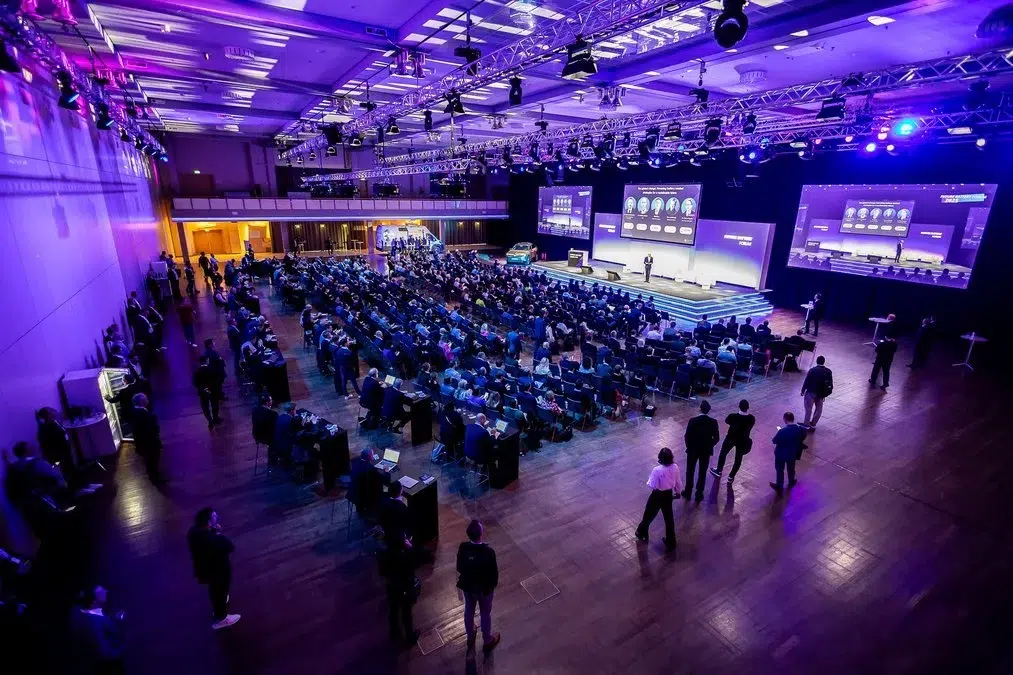
The Future Battery Forum 2025 mobilized substantial industry presence across two days:
- 1,000+ on-site decision-makers and senior experts gathered at ECC Berlin
- 2,000+ participants joined virtually from international locations
- 100+ exhibitors showcased battery value chain technologies and solutions
- 80+ international speakers from politics and industry delivered presentations
- 6 strategic focus themes structured the conference agenda
Europe’s Battery Forum
This year’s forum operated under the motto “Accelerating Europe’s battery industry. Innovative. Sustainable. Stronger together,” reflecting the sector’s current preoccupations with manufacturing scale-up, regulatory compliance, and technology advancement. The event format combined traditional conference elements—keynotes, panels, technical talks—with interactive workshops, master classes, and networking sessions designed to facilitate business development beyond formal presentations.
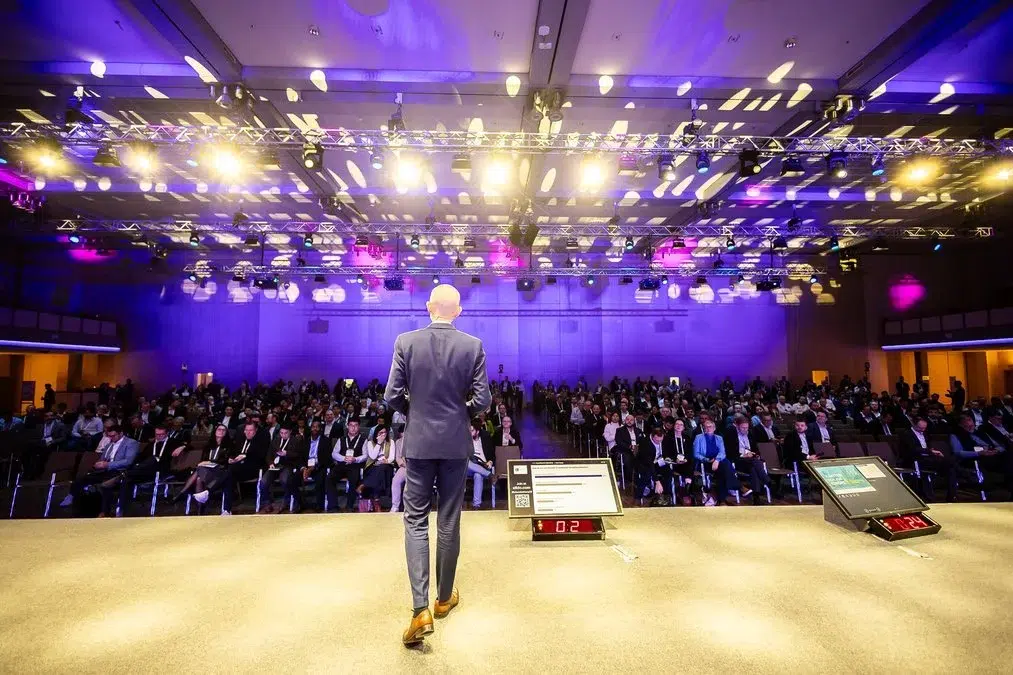
Simon Voss kicked off the interactive element of the forum by taking the immediate pulse of the industry. Facing a market flooded by cost-competitive Asian imports, Voss posed the defining question to over 200 live participants: Where can Europe truly differentiate itself?
The data was unequivocal. The audience rejected “lowest price” or “mass volume” as primary differentiators, voting overwhelmingly for Sustainability and low-carbon production.
Regulatory Frameworks as Competitive Assets
A defining theme of the conference was the strategic positioning of the European market against established global competitors. Developing a distinct competitive advantage requires looking beyond mass volume or price wars, with industry consensus identifying sustainability and low-carbon production as the primary differentiators for Europe. This strategic pivot reframes regulatory compliance not as a burden, but as a mechanism for quality assurance.
Ilka von Dalwigk of RECHARGE emphasized that upcoming frameworks like the EU Battery Regulation and the Battery Passport should be viewed as assets that enforce high environmental standards, effectively distinguishing European products in a crowded global value chain.
Bridging Development Cycles and Scaling Production
One of the most pressing operational challenges facing the sector is the disparity between development timelines. While traditional automotive cycles span roughly seven years, battery technology evolves significantly every 18 months. Bridging this gap requires a structural shift toward flexible partnerships and increased vertical integration, a strategy outlined by Dr. Uwe Keller of Mercedes-Benz AG, who noted that direct sourcing agreements for critical minerals are now essential for supply security.
To handle this complexity at TWh-scale, the industry is also moving away from bespoke manufacturing facilities toward standardized blueprints. Silvia-Luna Yzaguirre Sánchez of PowerCo SE advocated for the “Standard Factory” concept and the use of digital twinning to simulate production lines, allowing manufacturers to identify bottlenecks long before physical construction begins.
Material Science of Profitability and Safety
Profitability in battery production remains inextricably linked to material science, particularly at the Cathode Active Material (CAM) level where the cost-performance ratio is largely determined. The industry trajectory is clearly pointing toward high-nickel, low-cobalt chemistries combined with regional closed-loop recycling to retain critical metals. Dr. Daniel Schönfelder of BASF highlighted these shifts as essential for resilience.
However, as energy densities rise, the demands on passive components and safety barriers increase exponentially. Dr. Matthias Sckuhr of Freudenberg pointed out in his session that advanced thermal barriers and gas handling systems are no longer optional but are critical engineering requirements to maintain safety standards in high-performance units.
Localization and Design Trade-offs
The push for sustainability is also driving a reconfiguration of global logistics, with localization emerging as the most effective method to reduce carbon footprints. Feng (Matt) Shen of CATL posited that manufacturing within Europe to serve local OEMs is the only sustainable path forward, significantly cutting logistics costs. On the design front, engineers are grappling with the trade-offs inherent in new architectures. The shift from module-based designs to Cell-to-Pack (CTP) formats boosts energy density by reducing passive weight, yet creates new complexities for repairability. Lukas Kothmeier of LKMC warned that this integration requires engineers to solve recycling challenges during the initial design phase, rather than treating them as an afterthought.
The Logistics of End-of-Life Management
While the industry is adept at shipping new units, the infrastructure for reverse logistics remains a critical bottleneck. Lithium-ion batteries, classified as Class 9 Dangerous Goods, require specialized warehousing with advanced fire suppression systems. Michael Pohl of DP World provided a sobering analysis of this gap, noting that while forward supply chains are robust, the network required to safely transport damaged or end-of-life batteries back for recycling is still critically underdeveloped and requires immediate investment.
Looking Ahead
The insights from the forum suggest that the “hype phase” has concluded, replaced by a focus on execution, supply chain transparency, and granular technical excellence. For those who missed the live sessions, the event platform remains open for networking and video on-demand until December 24, 2025. Stakeholders are already looking toward the next milestone in this journey, with the 7th Future Battery Forum officially scheduled to return to the ECC Berlin on November 24-25, 2026.