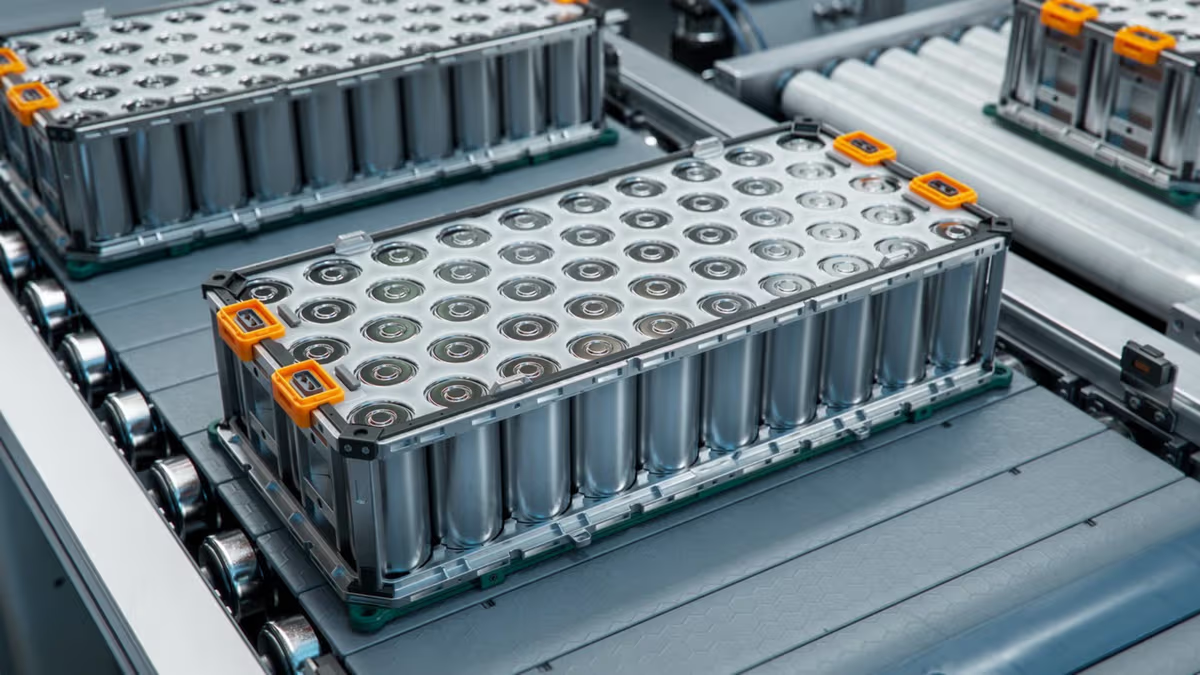


CATL announced that its newly developed 350 Wh/kg prismatic battery cell successfully passed aviation-grade safety tests in China, marking the first prismatic cell at this energy density to meet such standards. Designed for use in manned electric vertical takeoff and landing (eVTOL) aircraft, the cell underwent rigorous thermal runaway tests on two adjacent cells located at various positions within a battery pack, including both center and corner modules.
During testing, CATL triggered thermal runaway events to observe potential thermal propagation. The results showed no chain reaction of heat or fire spreading to neighboring cells, indicating strong containment and an absence of thermal propagation. Civil Aviation Administration of China representatives witnessed and reviewed the cell manufacturing, pack assembly, and testing processes.
According to CATL, the test data are directly applicable to subsequent airworthiness certification of complete eVTOL systems. The 350 Wh/kg cell represents a significant advancement over the typical 280 to 320 Wh/kg cells used in most current eVTOL models. Although the overall pack energy density will be lower once modules, cooling systems, and housing are included, the higher cell-level density supports longer operational range, reduced aircraft weight, and increased payload capacity.
CATL says the cell is ready for mass production and will be first integrated into Autoflight’s manned eVTOL aircraft lineup. One of these models, the V2000EM Prosperity, features a 15-meter wingspan, seating for six, a maximum takeoff weight of 2,400 kilograms, an operational range of 200 kilometers, and a maximum altitude of 3,000 meters.
As of June 2026, CATL held 32.59 GWh of installed capacity in China, accounting for a 43.2% share of the domestic market. It remains the world’s largest battery supplier, providing cells to both domestic and international electric vehicle manufacturers.
Source: Car News China