

Key Players in Silicon battery Development & Manufacturing
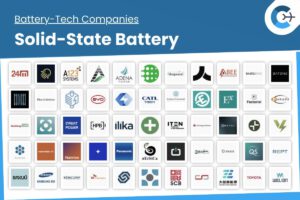
All silicon battery companies on Battery-Tech Network (A–Z, 108 profiles)
A — A123 Systems · ADVANO · Advantelec · AESC · Agratas · ALKEGEN · Altech Batteries · AM Batteries · American Lithium Energy (ALE) · Ampace Technology Limited · Amprius Technologies Inc. · Anthro Energy · Applied Materials · Arkema
B — BASF · BASQUEVOLT · Battery Advice · Beyonder · Blue Current Inc. · BTR Mediterranean New Material Technology · BTR New Material Group Co. Ltd
C — CALB Group Co. Ltd. · CELLARK POWERTECH · Cenate AS · Coreshell · CSEM · CustomCells
D — Daejoo Electronic Materials · Dongwha Electrolyte
E — E-Magy · Ecellix Inc. · Elkem ASA · Enchem America INC. · Enevate Corporation · ENOVIX Corporation · Enpower Greentech Inc. · EnPower Inc. · Epsilon Advanced Materials Pvt. Ltd.
F — Focus Graphite · Forge Battery · Forge Nano Inc.
G — GDI · GELON LIB GROUP · Group14 Technologies
H — HKG Energy · HPQ Silicon Inc.
I — Ilika · InoBat · International Battery Company · Ionblox · Ionic Mineral Technologies · Italvolt
K — KILNTECK (out of business)
L — Leading Edge Materials Corp. · LeydenJar · LiNova Energy
N — Nanode Battery Technologies · NanoGraf Corporation · Nanografi · Nanoramic Laboratories · Nanoscale Components · NantG Italia · NantG Power · Navitas Systems. LLC · NEO Battery Materials · Nexeon Ltd · NorcSi GmbH · Novacium SAS
P — Paraclete Energy · PEM Motion · Princeton NuEnergy · PT Indonesia BTR New Energy Material (Kendal)
R — REC Silicon · Renascor Resources Limited · Riedhammer GmbH
S — Samsung SDI Hungary · SGL Carbon · Sicona Battery Technologies · Sienza Energy · Sila Nanotechnologies · SiLi-ion Inc. · Sino Applied Technology (SiAT) · Sinova Global · Sionic Energy · SK Battery America · Solid Power Inc. · Solidion Technology Inc. · StoreDot
T — TA Instruments · Talga Group · Talga Technologies Limited · Tenpower · Top Material · TRION Battery · Tyfast
V — Vianode · Volta Energy Technologies · VoltaXplore · VON ARDENNE Mobility
Silicon Battery Technology
Silicon battery technology uses silicon—often as part of the anode or within composite materials—to store more electrical energy than traditional lithium-ion designs that rely on graphite. The technology has attracted interest across consumer electronics, electric vehicles, and storage systems because it can provide longer-lasting power and faster charging without significant modifications to current battery assembly processes. Researchers and manufacturers continue to work on the technical issues that prevent silicon batteries from becoming a mainstay in high-performance energy solutions.
Key Characteristics of Silicon Battery Technology
Enhanced Energy Capacity
Silicon offers a much higher lithium storage capacity than graphite. This increase in capacity means that batteries built with silicon can hold more energy per unit of volume, which translates into extended operating times for portable devices and greater driving range for electric vehicles.
Fast Charging
Better reaction kinetics in silicon-based batteries can support shorter charging cycles. This improvement is particularly valuable in applications where time is critical, such as in transportation and consumer electronics.
Compact and Lightweight Design
Because silicon batteries can achieve high energy density within a smaller volume, devices can be made lighter and more compact. This attribute is important for portable gadgets and vehicles where reducing weight can significantly affect overall performance and energy efficiency.
Technology Classifications / Types
Silicon battery technology includes several types based on how silicon is integrated into the cell design:
Nanostructured Silicon
Technologies have been developed to use silicon nanowires or nanoparticles, which are designed to handle the expansion that occurs during charging. By reducing the particle size, manufacturers can maintain battery integrity over many cycles.
Composite Anodes
Combining silicon with carbon or polymeric materials provides a more stable structure. These composites manage the stress caused by silicon’s swelling while still offering enhanced storage capacity.
Advanced Electrode Architectures
Innovative configurations such as three-dimensional porous structures and multilayer electrodes contribute to improved ion transport. These designs help to facilitate quicker charging and better overall performance, even under repeated cycling.
Development and Commercialization Challenges
Volume Expansion
Silicon can expand by up to 300% during the insertion of lithium ions. This large change in volume can damage the electrode and result in a rapid decay in capacity. To address this, researchers are focusing on using nanostructures and protective coatings to absorb or mitigate the strain.
Stability Over Multiple Cycles
Maintaining consistent performance over numerous charge/discharge cycles remains a technical hurdle. Efforts include optimizing binder materials and electrode designs to preserve structural integrity during use.
Manufacturing Processes
Transitioning from research to cost-effective production means developing methods that can be adopted on an industrial scale. Manufacturers are working to integrate silicon into existing battery production lines while controlling costs and ensuring uniform performance.
Recent Developments and Examples
Several companies have made visible progress in silicon battery technology:
Ionic Mineral Technology
Ionic MT has secured the Silicon Ridge halloysite property from the State of Utah, in a move to expand its nano-silicon anode battery material production. This strategic acquisition will increase the companies halloysite reserves, which are critical for meeting the growing demand for fast-charging EV and energy storage market.
Sila Nanotechnologies
Sila Nanotechnologies has developed Titan Silicon™ nano-composite anodes designed to replace graphite in existing battery systems. Their approach supports current production processes and has led to partnerships with automotive and electronics companies, including collaborations with Mercedes and Panasonic.
Group14 Technologies
Group14 Technologies introduced the SCC55® silicon–carbon composite material. By embedding silicon within a carbon matrix to control volume changes, the technology has found support from original equipment manufacturers such as Porsche.
Amprius Technologies
Amprius Technologies has achieved energy density figures as high as 500 Wh/kg through the use of silicon nanowire-based anodes. Their batteries are being tested for use in both aerospace and electric vehicles, supported by research organizations and automotive collaborators.
Enovix Corporation
Enovix Corporation uses an innovative three-dimensional cell design that incorporates 100% active silicon anode material. Their technology aims to offer improved storage capacity and efficiency for consumer electronics and electric vehicle applications.
LeydenJar Technologies
LeydenJar Technologies has addressed silicon swelling by building a porous, 100% silicon anode. Their design maintains performance over a long number of cycles and is already under evaluation by major manufacturers.
In addition to these business entities, more players such as Enevate Corporation, Nexeon (UK), and NEO Battery Materials are addressing challenges like fast charging and capacity retention. Meanwhile, manufacturing groups in Asia, including BTR New Material Group and Shanshan Technology, support large-scale production by producing silicon–carbon composite anodes for companies in the automotive and electronics sectors.
This overview provides insight into the technical potential of silicon battery technology, along with the hurdles that must be overcome to bring these energy solutions to widespread commercial use.