
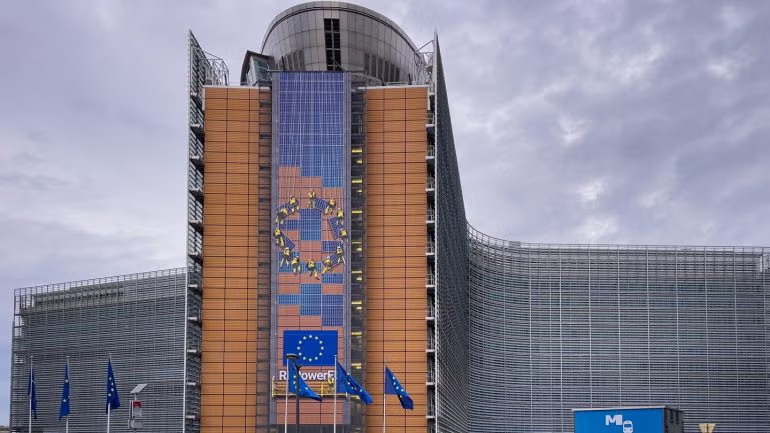

German Chancellor Friedrich Merz plans to request that the European Commission adjust its current regulation banning sales of new petrol and diesel cars after 2035. In a letter to Commission President Ursula von der Leyen, Merz is expected to argue for a technology-neutral approach that preserves options for manufacturers, including plug-in hybrids, battery-recharging hybrids and range-extended electric vehicles using efficient combustion engines as backup for longer trips.
Merz has emphasized that allowing certain hybrid technologies to continue beyond 2035 would be “more opportune and pragmatic,” combining the strengths of internal combustion engines and electric drive systems. He also noted that Germany’s coalition government, including the Social Democratic Party, supports revising the ban to maintain flexibility and protect domestic jobs in the automotive sector.
SPD Vice-Chancellor and Finance Minister Lars Klingbeil confirmed his party’s endorsement of the proposed revisions, citing the importance of securing the future viability of Germany’s auto industry. Meanwhile, Bavaria’s CSU leader Markus Söder indicated that the German government is considering a subsidy of up to €5,000 for buyers of electric or hybrid vehicles that use a high proportion of domestically produced components.
In September, the European Commission announced it would bring forward a review of the 2035 phase-out rule to provide greater planning certainty to vehicle makers. Commission Vice-President Stéphane Séjourné has signaled EU readiness to show “flexibility” in how the phase-out is implemented, with a further announcement expected on December 10. Commission spokesperson Paula Pinho added that the closed consultation, which ended on October 10, will inform the final proposals.
Some industry stakeholders have raised concerns that the existing timeline may not align with current electric vehicle uptake rates. However, major automakers and brands that have invested heavily in electrification—such as Volvo and Polestar—remain opposed to weakening the 2035 deadline, arguing that it is critical to meeting long-term climate neutrality goals by 2050.