
China’s Ministry of Finance and State Taxation Administration announced on October 12, 2026, that the export value-added tax rebate for new energy vehicles will decline from 13% to 9% starting April 1, 2027. The applicable rate will be determined by the export date listed on the customs declaration.
The adjustment covers battery-electric and plug-in hybrid passenger vehicles, electric buses and electric truck tractors. Existing export consumption tax rebate and exemption policies will remain unchanged for affected products that are subject to consumption tax. The agencies did not provide a specific reason for reducing the NEV rebate.
The change follows earlier reductions in export tax support for other clean-energy products. China eliminated export VAT rebates for solar photovoltaic products on April 1, 2026, and reduced the rebate for battery products from 9% to 6%. Previously announced plans call for battery export rebates to end on January 1, 2027.
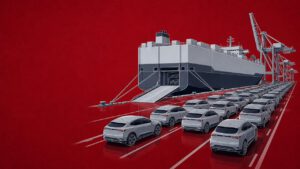
The NEV measure comes as vehicle exports account for a growing share of Chinese automakers’ sales. China exported 4.006 million NEVs during the first nine months of this year, up 130% year over year, according to the China Association of Automobile Manufacturers. September exports increased 160% to 571,000 vehicles, while domestic sales declined 9.4% to 1.252 million vehicles.
China Cuts NEV Export VAT Rebate to 9% in 2027
The 4-percentage-point reduction comes as overseas growth becomes more important, putting automakers’ export profitability under pressure.
Green marks export growth and red the domestic decline; September figures cover both passenger and commercial vehicles.
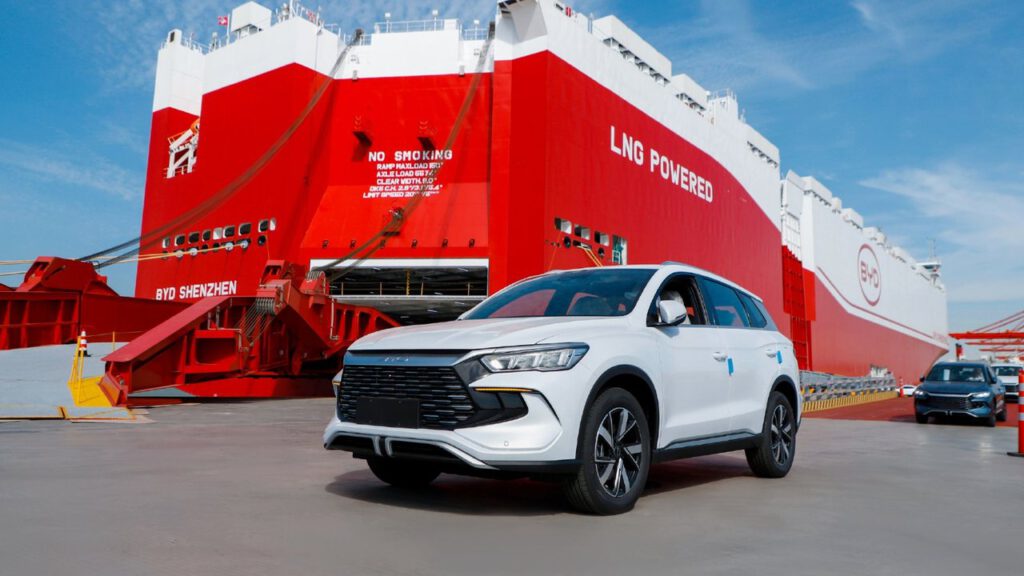
Deutsche Bank estimated that the adjustment will reduce BYD’s net profit by about 5,000 yuan ($743) for each exported vehicle, beginning in the second quarter of 2027. BYD recorded overseas sales of 1,342,468 vehicles during the first three quarters of this year, equivalent to about 43% of its total wholesale volume. The bank also expects lower export profits at Chery, Geely Auto, SAIC Motor, GWM, Changan Automobile, Leapmotor, GAC Group and Xpeng.
Source: CnEVPost