


Automotive Cells Company (ACC) matters because it is one of Europe’s most visible attempts to localize EV battery cell and module production at gigafactory scale—while keeping the industrial model anchored in European automakers’ requirements. The company began production at its Billy-Berclau/Douvrin, France gigafactory with an initial 13 GWh block and a stated plan to reach 40 GWh at that site by 2030.
The tension behind today’s most common stakeholder questions—“Where is ACC building, what chemistry will it run, and is the expansion still on?”—comes from a strategic pivot. ACC paused (and by early 2026 described as definitively shelved) the next gigafactory projects in Kaiserslautern, Germany and Termoli, Italy, after market conditions deteriorated and cost pressure increased. The result: ACC’s near-term story is less about adding new sites and more about proving reliable, cost-competitive ramp-up in France while keeping its technology program aligned with customer economics.
Key Facts & Figures
- Legal name: Automotive Cells Company SE (ACC)
- Founded: August 2020
- Headquarters: Bruges, France
- Ownership / backers: Stellantis, TotalEnergies (via Saft), Mercedes-Benz
- CEO: Yann Vincent
- Workforce: 2,000+ employed since start (company statement)
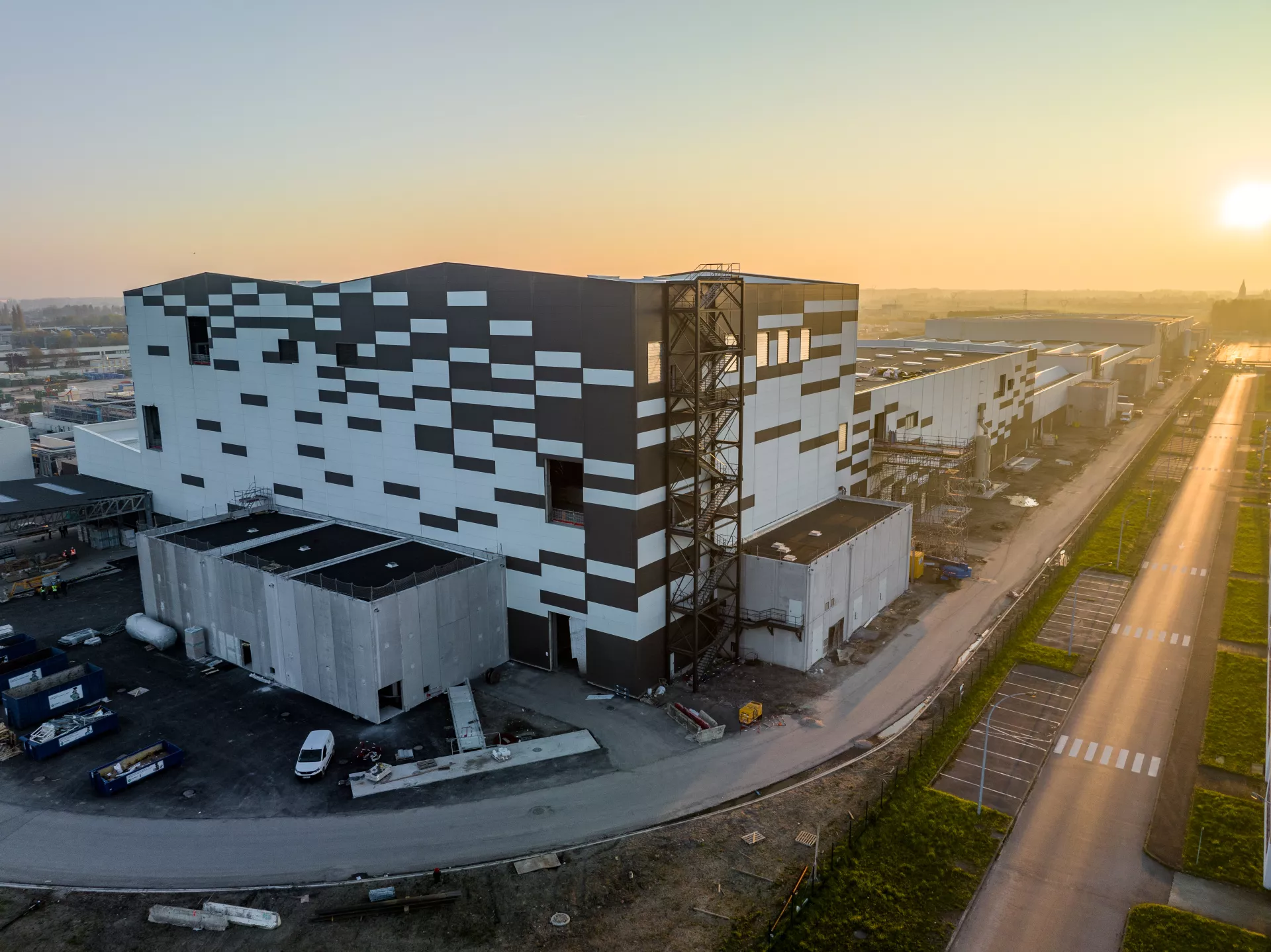
- Operating manufacturing site: Billy-Berclau/Douvrin, Hauts-de-France
- Current stated capacity: 13 GWh initial block (site opened/inaugurated 2023)
- Stated site target: 40 GWh by 2030 (three blocks planned)
- Expansion status: Germany and Italy projects paused in 2024; described as shelved in Feb. 2026
- Funding: €4.4B debt financing announced Feb. 2024 to support multi-site buildout under an IPCEI framework
- Revenue: Not publicly disclosed
Company Background & Market Position
ACC was created in 2020 as a European battery manufacturing joint venture, initially between Stellantis and TotalEnergies (through Saft), with Mercedes-Benz joining in 2021. Its positioning is straightforward: supply automotive-grade lithium-ion cells and modules built in Europe with industrial methods designed for high-volume quality and cost targets demanded by mass-market EV programs.
ACC’s European footprint is structured around a staged industrialization path:
- R&D center near Bordeaux (Bruges) for prototype development and validation
- Pilot line in Nersac for process scale testing
- Gigafactory production in Billy-Berclau/Douvrin
Because ACC’s shareholders are also its natural anchor customers, market position is tightly linked to platform and vehicle rollout timing at Stellantis and Mercedes-Benz. That provides demand visibility, but it also means the company must meet automaker expectations for cost per kWh, yield, and ramp discipline—metrics that have become harder as EV growth slowed in parts of Europe and low-cost LFP supply expanded.
Manufacturing Capacity & Infrastructure
ACC’s industrial center of gravity is the Billy-Berclau/Douvrin gigafactory in northern France. Public disclosures and partner announcements tie the site to a 13 GWh initial production block with a buildout plan toward 40 GWh by 2030 across multiple blocks. This site has been framed as a template for how ACC would replicate capacity in other European regions.
In February 2024, ACC announced €4.4 billion in debt financing to fund additional blocks across its French, German, and Italian projects under the EU’s IPCEI on Batteries umbrella. In practical terms, that financing was meant to move ACC from “first factory ramp” to a multi-plant network.
That trajectory changed in 2024. ACC paused the Kaiserslautern, Germany and Termoli, Italy gigafactory projects amid weaker EV demand and higher cost inputs (energy, construction, and materials). By February 2026, multiple public reports described ACC’s position as definitively shelving those projects, not merely delaying them. This is the core reason the France ramp-up now carries more weight: Douvrin becomes the proof point for whether ACC can reach competitive unit economics in Europe.
From an operations perspective, ACC also signals that gigafactory performance depends on 24/7-style industrial cadence, asset management discipline, and high electricity availability—issues that tend to surface in investor and local-community questions about reliability, staffing, and infrastructure readiness.
Technology & Product Portfolio
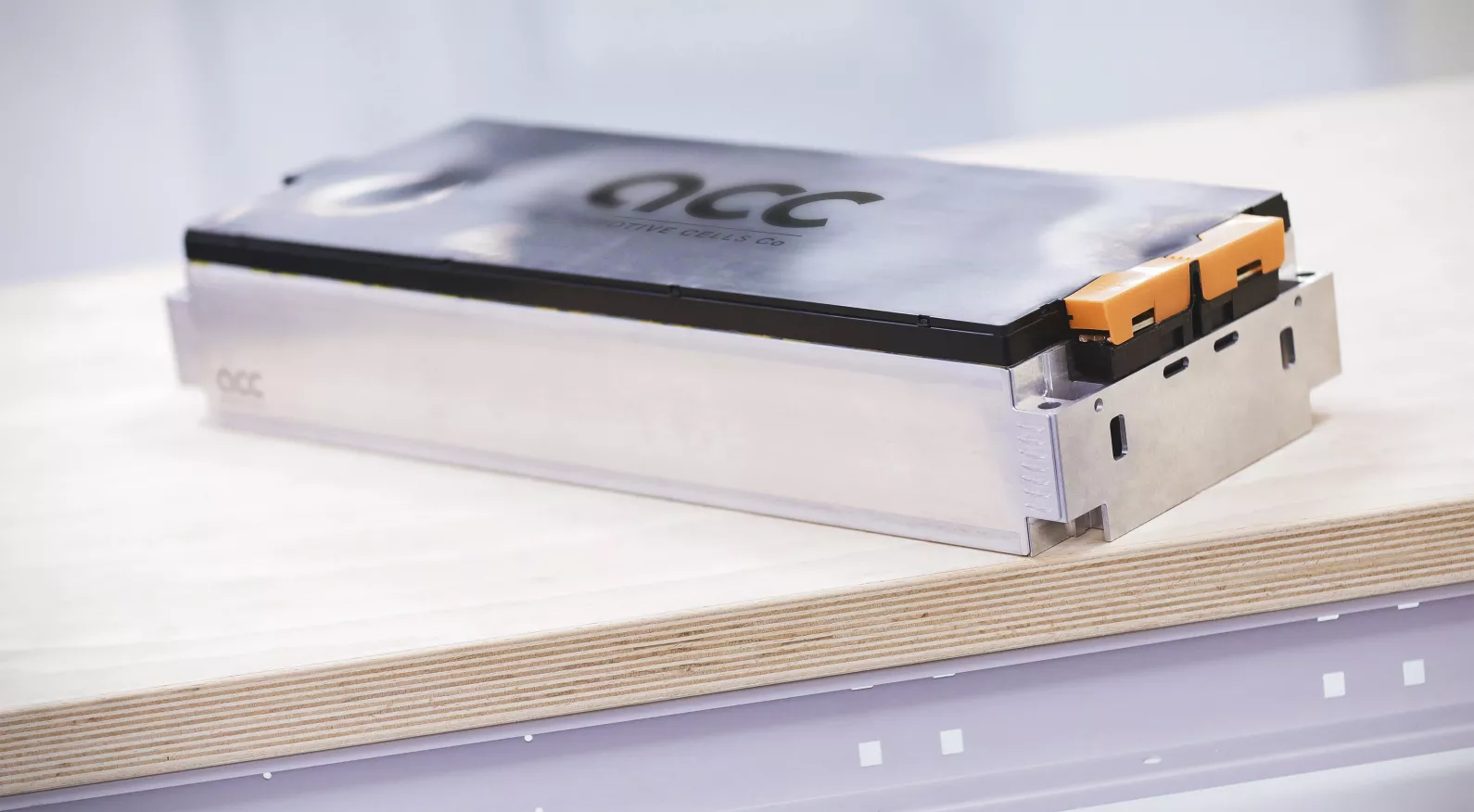
ACC’s product scope is focused: lithium-ion battery cells and modules for electric vehicles, rather than stationary storage. Its stated technical goals emphasize higher energy density, smaller and lighter packs, faster charging, and lower carbon footprint through eco-design and manufacturing choices.
Chemistry discussions in public materials center on NMC (nickel-manganese-cobalt) for high-energy automotive applications, while the broader European market shift toward LFP (lithium iron phosphate) frames ACC’s cost challenge. When ACC paused Germany and Italy projects, reporting linked the decision to reassessing whether future plants should run lower-cost chemistries and whether Europe can support competitive LFP scale without eroding margins.
Technology development is organized around a three-stage method:
- Design and prototyping at the R&D center (Bruges)
- Process validation and scaling at the Nersac pilot line
- Mass production in gigafactories such as Billy-Berclau/Douvrin
ACC also references a forward program that includes solid-state exploration, though this is framed as longer-term R&D rather than near-term volume production.
One practical differentiator ACC stresses is industrialization capability: building cells is not only chemistry; it is yield management, quality systems, and manufacturing repeatability. ACC’s public communications reference Industry 4.0-style factory operations and digital controls as part of how it intends to close the cost and quality gap with long-established Asian suppliers.
Strategic Initiatives & Market Context
ACC’s strategy is being shaped by three real-world pressures that show up repeatedly in stakeholder interest on its website and in coverage:
- European cost position vs. imports: Energy intensity, capex, and learning-curve speed can make early European factories expensive per kWh. That makes ramp timing and scrap reduction financially decisive.
- Chemistry economics: Europe’s move toward more affordable EVs increases attention on materials cost (cobalt and nickel exposure) and on whether LFP adoption becomes necessary for mass-market programs.
- Talent and operating cadence: ACC openly emphasizes hiring and runs a dedicated careers site—an indicator that workforce scaling is both urgent and exposed to common recruiting risks.
On sustainability, ACC positions eco-design and recyclability as part of its value proposition, and it publishes CSR materials. For European industrial projects, that matters not only for brand, but also for permitting, public funding frameworks, and automaker supply-chain reporting.
Looking Ahead
ACC is pausing new gigafactories while ramping French output because it is trying to solve the hardest part of Europe’s battery equation: achieving repeatable, automotive-grade volume production at a cost that works for mass-market EV programs. Douvrin’s ramp-up is the company’s near-term credibility test; it is where yield, uptime, and unit economics must converge.
With the Germany and Italy projects shelved as of early 2026 reporting, ACC’s next chapter likely depends on two measurable outcomes: (1) how quickly the French site moves from an initial 13 GWh block toward higher utilization and added blocks, and (2) whether ACC can align its roadmap—NMC today, with cost pressure pushing chemistry reassessment—with what European automakers can sell profitably.
For investors and industry readers, the takeaway is clear: ACC’s significance is not just that it built a gigafactory; it is that it is stress-testing whether a European-owned battery supply chain can scale under real demand and cost constraints—and adjusting expansion plans when the economics do not pencil out.