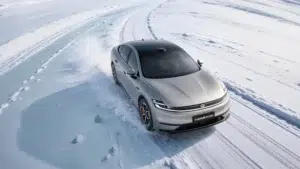


The US energy sector is facing rapid shifts as artificial intelligence workloads drive surging electricity demand while electric vehicle adoption enters a more complex phase. At the BloombergNEF Summit in San Francisco on January 26–27, 2026, industry leaders, policymakers and financiers outlined four key insights shaping the evolving landscape.
⚡ Key Energy Trends from BNEF Summit 2026
Data Centers
“Speed to power” is the priority; behind-the-meter solutions and nuclear agreements gaining traction
Renewables Economics
Solar & wind remain most competitive despite subsidy rollbacks; costs continuing to decline
EV “Messy Middle”
Short-term headwinds from policy changes, but technological wildcards offer acceleration potential
AI Meets Auto
Robotaxis predominantly electric; EVs ideal for high-mileage autonomous operations
800+ stakeholders attended BNEF Summit San Francisco | January 26-27, 2026
First, data center developers are racing to secure reliable power as grid connection delays and gas-turbine supply constraints tighten capacity. BloombergNEF projects data center demand will more than double to 106 gigawatts by 2035. To bridge the gap, operators are turning to behind-the-meter procurement, restarting retired plants and signing new nuclear agreements. Innovative approaches—such as medium-voltage solid-state transformers, superconducting cables, advanced liquid cooling and virtual power plants—could boost efficiency, but market rules and policy lags remain barriers.
AI Data Center Power Demand Forecast
Source: BloombergNEF Summit 2026
Second, despite recent subsidy rollbacks, renewables and storage maintain favorable economics. BloombergNEF’s latest levelized cost of energy analysis predicts that by 2035, solar costs could fall by 30%, battery storage by 25%, onshore wind by 23% and offshore wind by 20%. Continued investment is also flowing into nuclear, geothermal, long-duration storage, hydroelectric power and carbon management technologies.
Clean Energy Cost Reduction Forecast to 2035
Source: BloombergNEF Levelized Cost Updates
Third, the electric vehicle transition has entered a so-called “messy middle.” With federal incentives under review, US passenger EV sales are expected to decline about 15% in 2026. Yet California—a quarter of the country’s EV market—remains committed to rebates and its zero-emission vehicle mandate. Stakeholders identified potential accelerators, including solid-state batteries, ultra-fast charging and extended-range models to address heavy-duty and off-road segments.
🚗 US EV Market Update 2026
💰 California’s EV Support Package
Finally, the AI revolution is extending into transportation through electric robotaxis. These fleets leverage onboard batteries to power AI chips and sensors, logging higher mileage and benefiting from lower operating costs and zero tailpipe emissions in urban settings.
Source: BNEF Insights