

Welcome back to this week’s Battery Business Insights article on Donut Lab’s first independent test results. When the Finnish startup unveiled its solid-state battery at CES in January 2026, the company made claims so extraordinary that industry experts immediately demanded proof. On February 23, 2026, Donut Lab delivered its first answer: VTT Technical Research Centre of Finland confirmed that the battery can charge at speeds far exceeding current lithium-ion technology. The test results validate one headline claim while exposing what still needs verification.
By the Numbers: What VTT Actually Verified
- 4.5 minutes: Time to charge from 0 to 80% at 11C rate (286A on a 26 Ah cell)
- 63°C: Peak surface temperature during successful 11C test with two heat sinks
- 90°C: Temperature that triggered safety cutoff during single heat sink test
- 98.4-99.6%: Discharge capacity retention after extreme fast charging (25.59-25.89 Ah of nominal 26 Ah)
- 11C charging rate: More than twice the charging speed of most production EV batteries
- 5C charging rate: Also tested, achieving full charge with peak temperature of 61.5°C
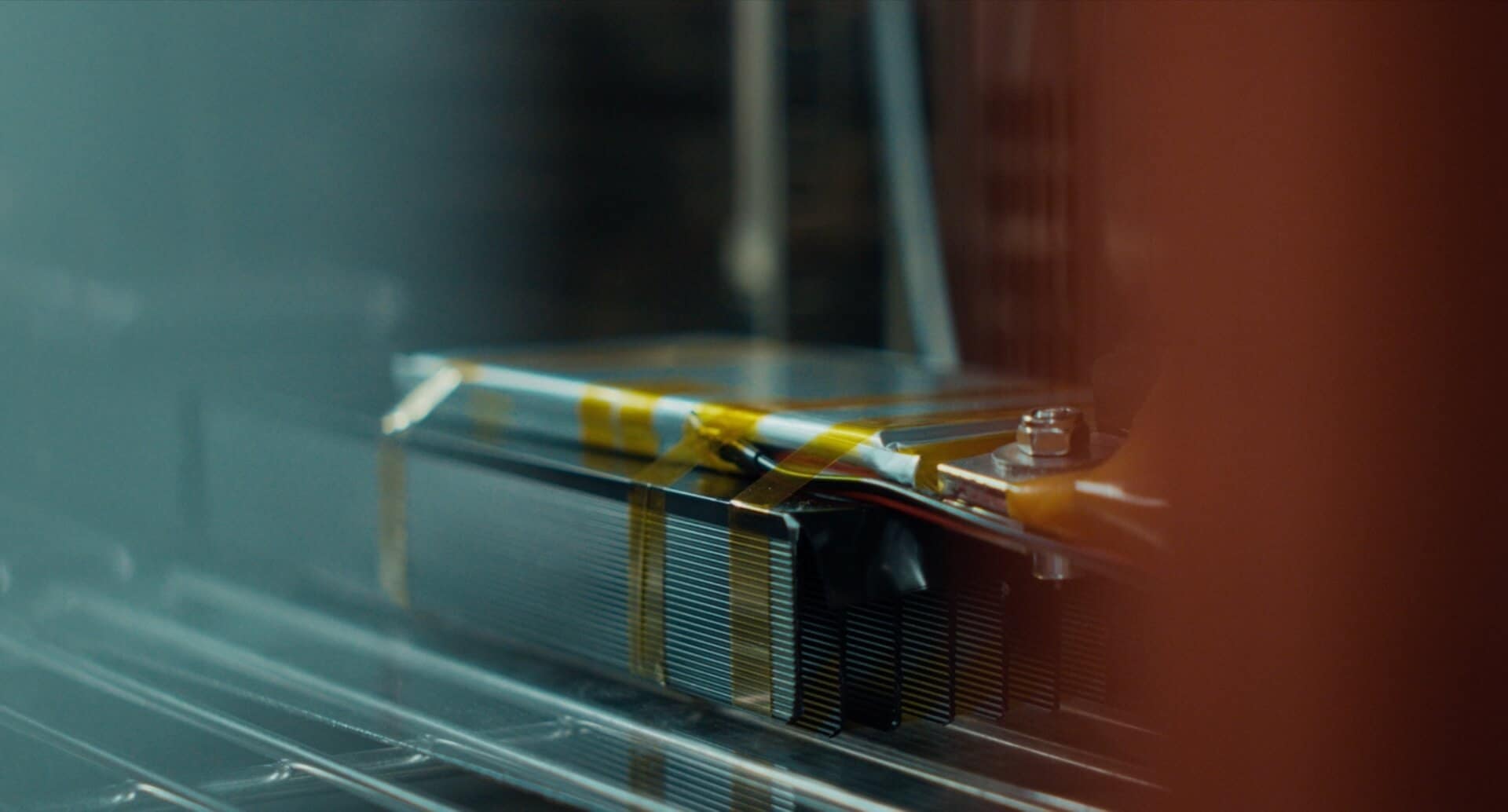
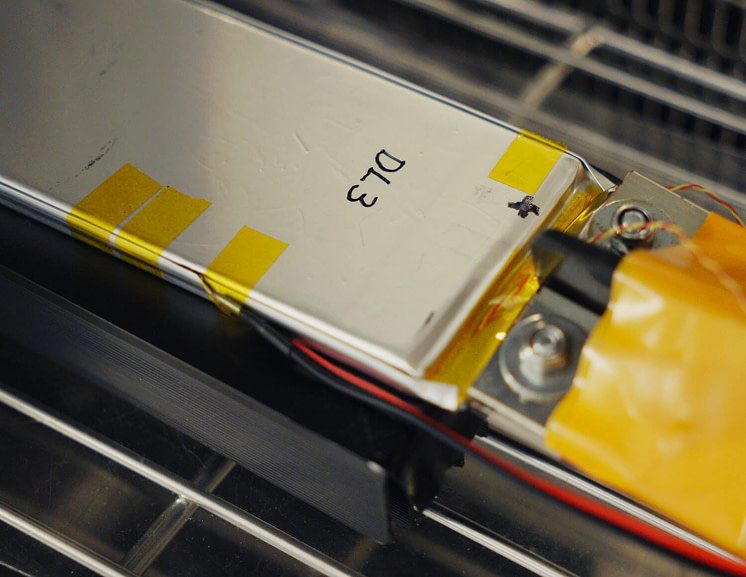
VTT tested a single 26 Ah cell using a PEC ACT0550 battery tester in a climate-controlled chamber. The testing protocol used constant-current/constant-voltage charging to 4.3V, followed by 1C discharge to verify usable capacity. The cell maintained structural integrity and delivered nearly full capacity after exposure to charging rates that would damage conventional lithium-ion batteries.
From CES Announcement to Mounting Skepticism
Donut Lab announced its solid-state battery at CES 2026 in January with specifications that would represent the most significant battery development in decades if proven true. CEO Marko Lehtimäki claimed the battery was already in production and would ship in Verge motorcycles during Q1 2026. The company positioned itself as the first to bring solid-state technology to market at scale, claiming current gigawatt-hour production capacity.
The announcement included four headline claims: 400 Wh/kg energy density, 100,000 cycle design life, 5-minute charging capability, and 99% capacity retention from -30°C to over 100°C. The company also claimed cost parity with lithium-ion and manufacturing compatibility with existing production infrastructure. No live demonstrations, patent disclosures, or peer-reviewed research accompanied the announcement.
Industry response was swift and skeptical. Svolt Energy chairman Yang Hongxin publicly called the technology a “”scam,”” stating that “”all the parameters are contradictory”” and that “”any technician with basic knowledge would recognize it.”” CATL executive Rico Ulissi called the invention “”clearly false”” on LinkedIn. The consensus among battery scientists focused on a core concern: no verified solid-state battery has demonstrated the combination of high energy density, extreme fast charging, and long cycle life simultaneously. Each specification individually would be notable; together, experts argued they defy known battery chemistry.
Partial Validation With Critical Gaps
VTT’s February 23 report (VTT-CR-00092-26) confirms one claim while leaving the most controversial specifications yet untested or unpublished. The charging performance data is legitimate and verifiable. A 26 Ah cell charged to 80% state of charge in 4.5 minutes at 286A represents an 11C charging rate that far exceeds most current production batteries. The cell then discharged at 1C, delivering 98.4-99.6% of its nominal capacity, proving that the energy stored during extreme fast charging was actually usable.
The thermal data reveals both capability and limitation. During the successful 11C test with two heat sinks, the cell’s surface temperature rose from 26.5°C to 63°C. When VTT attempted the same test with only a single heat sink—a configuration closer to real-world thermal management constraints—the temperature hit 90°C, triggering the lab’s safety cutoff. The 5C charging tests showed more modest temperature rises, peaking at 61.5°C with one heat sink and just 47°C with two heat sinks.
What Fast Charging Proves and What It Doesn’t
The VTT test results move Donut Lab from the category of completely unverified claims into the category of partially validated technology. A credible, state-owned European research organization has confirmed that at least one headline specification is real. This matters because charging speed was never the claim that battery experts called impossible. The controversy centers on the combination of specifications, not any single metric.
To understand what remains unproven, consider how Donut Lab’s claims compare to validated solid-state battery achievements. Factorial Energy’s solid-state cells, validated by Stellantis, achieved 375 Wh/kg energy density and over 600 cycles. Chinese developers have demonstrated 350-500 Wh/kg in prototype testing, with Dongfeng achieving 350 Wh/kg and FAW exceeding 500 Wh/kg in semi-solid-state configurations. None of these validated batteries also demonstrated 11C charging rates and five-figure cycle life simultaneously.
The validation gap on cycle life is the most critical. Donut Lab claims its battery can complete 100,000 charge-discharge cycles with minimal degradation. Most solid-state developers currently target hundreds to low thousands of cycles. The company has not explained how it validated this claim given its own timeline. Testing 100,000 full cycles, even at accelerated rates, would likely require years. Either Donut Lab has developed a validated predictive model for cycle life, has been testing batteries for far longer than its public timeline suggests, or the claim is based on projections rather than empirical data.
Credibility Builds Slowly
The VTT charging test represents exactly what Donut Lab needed to do: submit its technology to independent verification by a credible institution and publish the results transparently. The company deserves recognition for this approach, which stands in contrast to battery announcements that rely solely on internal data or controlled demonstrations. VTT’s confirmation of 11C charging capability is a real achievement that demonstrates technical capability beyond most current production batteries.
However, one verified claim does not validate a technology platform. Donut Lab bet its reputation on delivering production vehicles within weeks while making four headline claims that would each individually represent significant advances. The company has now proven one of those four claims. The other three—energy density, cycle life, and temperature extremes—are the specifications that experts called physically impossible when combined with fast charging.
The coming weeks will determine whether Donut Lab becomes a case study in battery innovation or battery hype. The company has promised additional VTT reports and imminent motorcycle deliveries. Independent reviewers will measure range, charging speed, and other specifications once vehicles reach customers. Teardown analysis will reveal the actual chemistry and construction. This imminent verification distinguishes Donut Lab from typical vaporware that projects results years into the future.
For the battery industry, Donut Lab’s approach offers a template and a warning. The template: submit extraordinary claims to independent verification quickly and transparently. The warning: incomplete verification creates incomplete credibility. The company’s decision to release partial results while major claims remain unproven may satisfy some skeptics while deepening concerns among others. Credibility builds slowly through repeated validation. It collapses instantly when claims prove false or delivery deadlines pass unmet.
Final Take
Donut Lab has moved from zero independent validation to one verified claim: the battery can charge at 11C rates that exceed most current production technology. This is real progress that deserves recognition. However, the Finnish startup’s most significant claims—400 Wh/kg energy density, 100,000 cycle life, and extreme temperature performance—remain unverified with just weeks remaining until its Q1 2026 delivery deadline. The battery industry may have some proof shortly.