

Chinese automaker BYD is on pace to export one million vehicles in 2025, driven by strong global demand for its new energy models. Industry figures released December 23 show that BYD shipped 128,067 passenger cars abroad in November, marking a 313.4% year-on-year increase and a 59.9% rise from October. From January through November, the company’s exports totaled 878,498 units, a 144% jump compared with the same period in 2024 and more than double its full-year export volume from last year.
In November’s export rankings, BYD placed second with 128,067 vehicles, following Chery at 135,190 units. While Chery remains the leading exporter, BYD has narrowed the gap considerably. Other top exporters in November included SAIC Passenger Vehicle, Great Wall Motor and Geely. On a cumulative basis for January to November, Chery led with 1,188,337 units exported, followed by BYD at 878,498, SAIC Passenger Vehicle, and Great Wall Motor.
BYD’s performance has been bolstered by its leadership in new energy vehicle (NEV) sales across multiple overseas markets. In November, it topped EV sales in Brazil, Turkey, Italy, Spain, Hungary and Croatia, and ranked first in overall brand sales in Singapore. For the first eleven months of 2025, BYD led the NEV segment in Brazil, Turkey, Spain and Italy, while claiming overall market leadership in Singapore and Hong Kong.
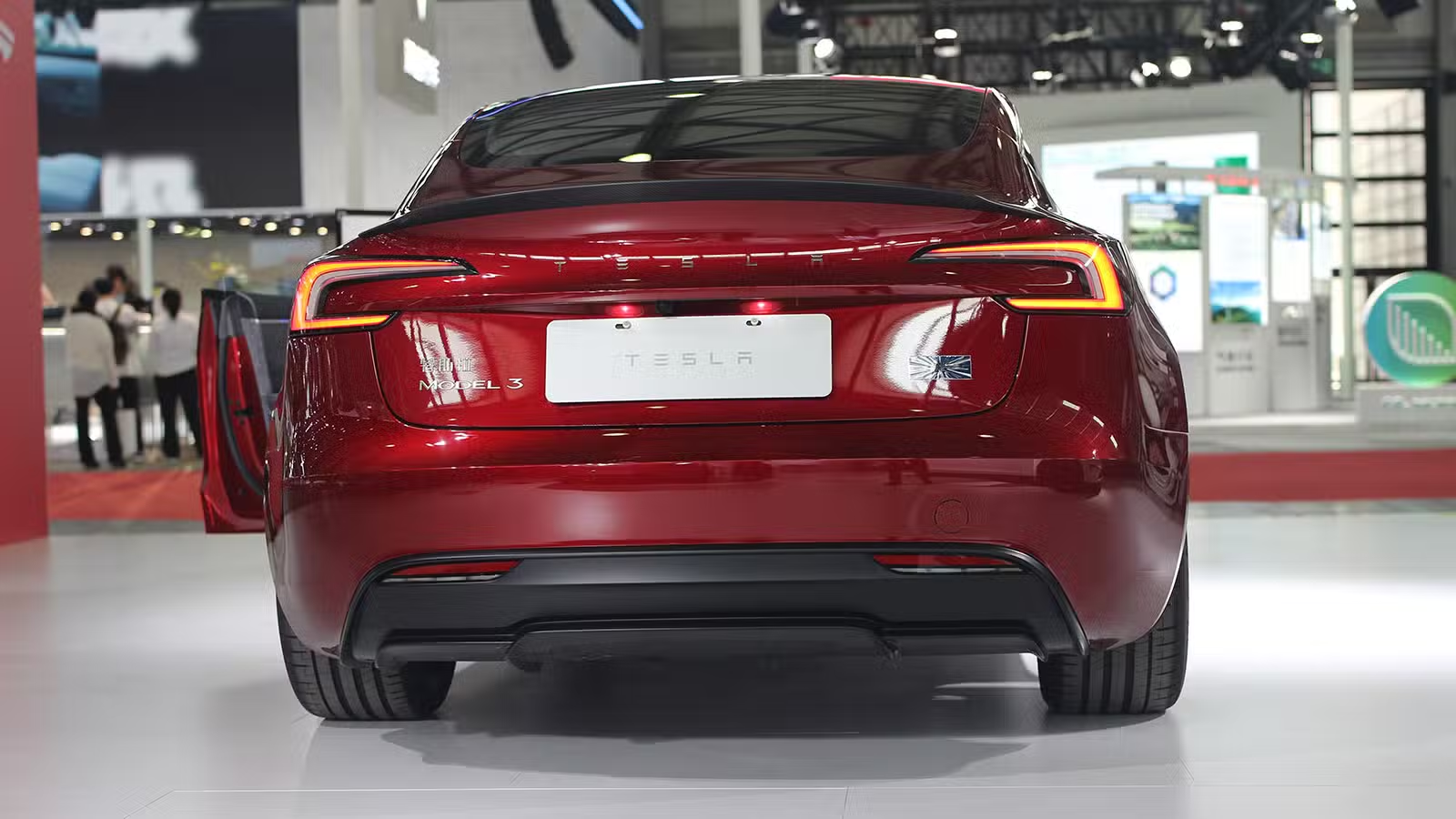
The automaker has also outpaced competitors in several key markets, surpassing Tesla in total sales across 11 regions, including the United Kingdom, Germany, Italy, Spain, Austria, Ireland, Malaysia, Turkey, Singapore, Thailand and China. As of December, BYD’s new energy vehicles are sold in 119 countries and regions. On December 18, BYD celebrated production of its 15 millionth NEV, becoming the first automaker to achieve that milestone.
Given November’s export pace, BYD needs only a month-on-month repeat in December to exceed one million exports for 2025. By focusing exclusively on new energy models, the company continues to close the export volume gap with traditional automakers that still rely largely on internal combustion engines.
Source: CarNewsChina