
At its recent Tech Day event, CATL announced the rollout of an integrated Supercharging and Battery Swapping Network, equipping all Chocolate passenger-car and Qiji heavy-truck swap stations with Shenxing supercharging piles. This upgrade transforms existing facilities into combined Supercharging & Swap stations.
CATL has already deployed 1,470 Chocolate swap stations across 99 cities. The company highlights two main advantages of the integrated solution: improved energy conversion efficiency and enhanced grid compatibility. Unlike energy storage–equipped ultra-fast charging systems, which incur two power losses during grid-to-storage and storage-to-vehicle transfers, the swap model requires a single conversion—from grid to swap battery to vehicle—cutting overall power loss by more than 13 percentage points. As a result, every 100 kWh drawn from the grid delivers an additional 13 kWh to vehicles, corresponding to roughly 65–120 km of extra driving range.
From the second half of this year, CATL plans to offer Chocolate users the option to exchange fully charged batteries during peak electricity pricing periods. Swap stations will pay users the difference in energy costs—potentially earning drivers up to 40 yuan (approximately 6 USD) per day and offsetting battery lease expenses. CATL notes that this shift reverses the traditional cost flow, turning battery swapping into a revenue opportunity for vehicle owners.
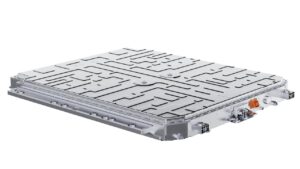
Supporting the new network, CATL also unveiled the Chocolate 26# swap battery built on an 800 V architecture. The initial 75 kWh unit will be followed by higher-capacity versions suitable for B- and C-segment vehicles. The company’s on-demand power allocation concept allows users to lease smaller batteries for daily commuting and switch to larger packs for long-distance trips, with lifetime warranties and upgrades to address degradation concerns.
Looking ahead, CATL aims to construct 4,000 integrated swap-charge stations by the end of 2026, spanning 190 cities and a 12-vertical, 11-horizontal highway network. Two station formats—standard integrated sites and 4S dealership experience centers—will adapt to urban cores, highway corridors, and test-drive venues. Early partners include Changan, Chery, GAC, Seres, SAIC-GM-Wuling and BAIC. By 2028, the company targets over 100,000 shared charging infrastructure facilities nationwide. To date, CATL has established battery swap partnerships with 11 automakers, covering 18 passenger brands and 25 vehicle models.
At the same event, CATL introduced four new batteries: third-generation Shenxing and Qilin cells, the second-generation Freevoy unit, and the sodium-ion Naxtra battery, slated for mass production in Q4. Both Shenxing and Qilin variants support even faster charging than existing blade-type designs and will leverage Shenxing supercharging piles at Chocolate swap stations.
Source: CarNewsChina