
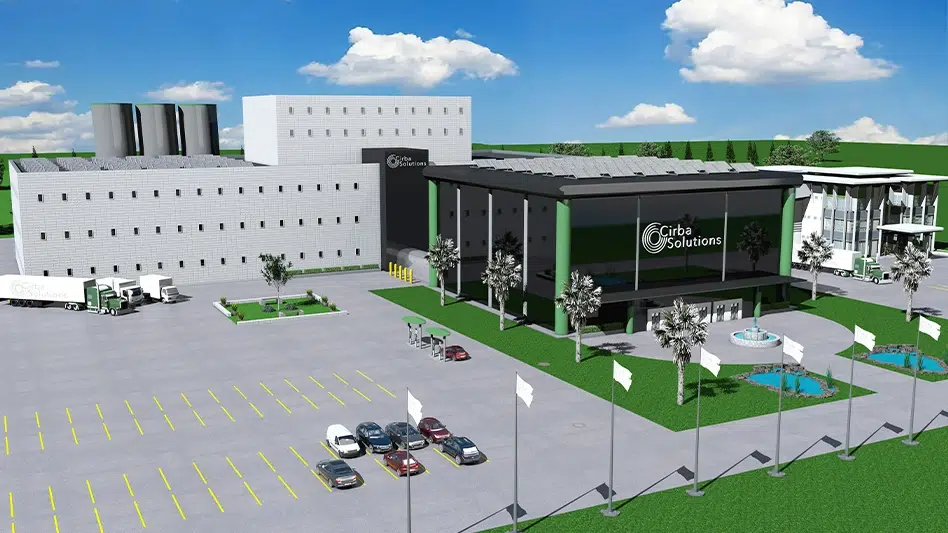

In honor of National Battery Day on February 18, 2026, Cirba Solutions is commemorating 35 years of leadership in battery recycling and critical minerals recovery across North America. Since its founding in 1991, the company has pioneered commercial-scale lithium-ion processing and built a comprehensive operational footprint from coast to coast. As global demand for batteries accelerates, Cirba Solutions continues to strengthen domestic supply chains by recovering and refining critical minerals essential to battery production.
Over its three-and-a-half-decade history, Cirba Solutions has achieved several industry firsts. It became the first U.S. company to process lithium-ion batteries at commercial scale and is among the few worldwide capable of processing lithium metal for next-generation battery technologies. The company also operates an internal logistics fleet, ensuring end-to-end control, safety and regulatory compliance. Its facilities handle all major battery chemistries and formats—lithium-ion, primary lithium, alkaline, lead-acid and nickel-based—serving automotive manufacturers, retailers, gigafactories, data centers, municipalities and other commercial enterprises.
Looking ahead, Cirba Solutions is strategically expanding to meet the surging need for battery-grade materials. Investments totaling over $400 million have driven a 600 percent increase in processing capacity for end-of-life lithium-ion batteries and manufacturing scrap. Planned large-scale expansions will produce battery-grade metal sulfates and lithium carbonate to support domestic battery manufacturing, while creating clean-energy jobs nationwide.
To enhance consumer access to recycling services, the company offers the WeRecycle Battery Map, an online tool linking users to nearly 750 drop-off locations, and WeRecycle Battery Boxes, a turnkey solution for safe packaging and transportation compliant with Department of Transportation regulations.
As it marks this milestone, Cirba Solutions remains dedicated to its mission of enabling an electric future through a resilient domestic supply chain for critical minerals—supporting advanced manufacturing, bolstering national security and accelerating the energy transition.
Source: PR Newswire