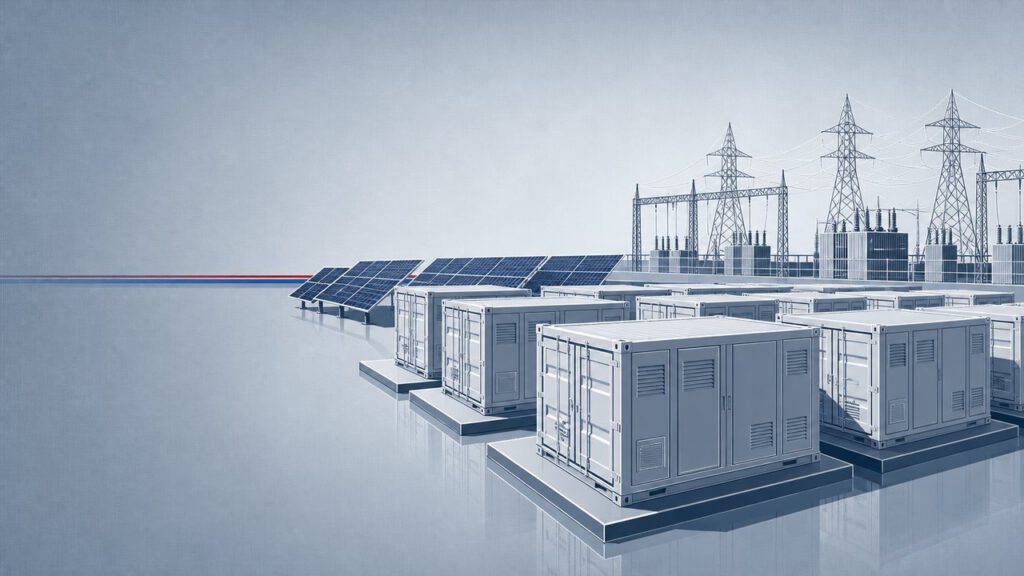
Global shipments of lithium-ion batteries for energy storage systems reached 461 GWh in the first half of 2026, a 71 percent increase from 270 GWh in the same period a year earlier, according to SNE Research. By comparison, global battery demand for electric vehicles rose 20 percent year over year to 609 GWh.
Growth is being driven by electricity demand from artificial intelligence data centers and the need to balance intermittent renewable generation. Global annual ESS shipments are forecast to reach 1,870 GWh by 2035, about twice the level expected this year.
South Korea is supporting the sector through technology funding, tax incentives and procurement. The Ministry of Trade, Industry and Resources announced its Battery Industry Technology Roadmap on September 22. The plan includes more than 250 billion won for next-generation battery technology and approximately 8 trillion won in industry investment through 2030 for manufacturing-process innovation and localized materials. It also targets sodium-ion and solid-state battery development.
The Ministry of Finance and Economy’s 2026 Tax Reform Proposal, announced on August 3, introduced a domestic production tax credit covering rechargeable batteries. Separately, the Ministry of Climate, Energy and Environment announced on September 23 that the third ESS Central Contract Market would select projects totaling a record 1,180 MW. The Korea Power Exchange tenders the ESS capacity needed for grid stability and signs 15-year contracts with successful bidders.
Competition remains intense. The four largest companies in the global ESS market during the first half of 2026 were Chinese and held a combined share of nearly 55 percent. At the end of 2025, global ESS supply capacity stood at 900 GWh, compared with actual demand of 612 GWh.
Regional supply imbalances may create openings for Korean manufacturers with production in Europe and North America. Europe is projected to face a 40 percent battery supply shortfall in 2030, while combined renewable-and-battery facility capacity is expected to rise from 6.3 GW in 2025 to about 35 GW in 2030. U.S. ESS demand is forecast to reach 320 GWh by 2035, while uninterruptible power supply demand for AI data centers is projected to reach 135 GWh.
Global ESS battery shipments hit 461 GWh in H1 2026
ESS shipments rose 71 percent from 270 GWh, far outpacing 20 percent growth in EV battery demand.
China’s top four held nearly 55 percent, while 900 GWh supply capacity exceeded 612 GWh actual demand at the end of 2025.
Source: koreatimes.co.kr