

A leading battery manufacturer and a U.S. automaker have completed a jointly built lithium iron phosphate (LFP) cell plant, which began production in June. The announcement was made by the battery maker’s vice president at the annual China Automotive Battery Innovation Alliance meeting. He added that the company’s overseas facilities in Hungary and Indonesia are expected to start operations before year-end.
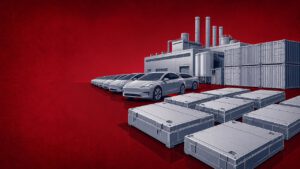
The partnership launched in February 2023, when the automaker unveiled plans to invest $3.5 billion in a wholly owned LFP battery plant in Michigan. Under a technology licensing and service agreement, the battery maker supplied cell technology and oversaw plant construction and operations. The facility was originally designed with an annual capacity of 35 gigawatt-hours to supply batteries for roughly 400,000 electric vehicles.
Project progress encountered significant challenges. In mid-2023, U.S. lawmakers questioned whether federal incentives under the Inflation Reduction Act would indirectly benefit the battery partner, prompting a temporary suspension. In November 2023, the automaker confirmed a scaled-back restart with a $2 billion investment and a 20 GWh capacity target.
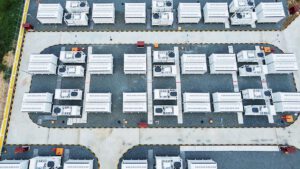
Further policy shifts in 2025, including the early termination of EV tax credits and relaxed fuel-economy standards under a new administration, led to widespread industry write-downs. In December 2025, the automaker recorded $19.5 billion in impairments on EV-related assets and canceled several battery collaborations. Despite this, the LFP plant agreement remained largely intact, with some capacity reallocated to stationary energy storage products. The automaker also plans to convert an existing battery facility into an energy storage plant using licensed technology.
When questioned again in January 2026 over the addition of energy storage business, the automaker confirmed project scope remained unchanged. According to both parties, the Michigan plant will enter formal mass production in 2026. On June 17, the automaker reported successful full-process trial production of its first batch of prismatic LFP cells, with all safety and quality checks met. Cells are now undergoing testing to achieve a defect rate of one in a billion. The plant is on schedule to deliver its first batch of automotive battery packs next year for economy and mid-size electric pickup models.
Source: CNEV Post