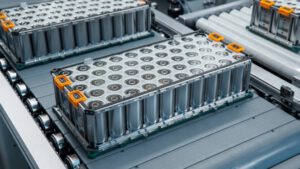
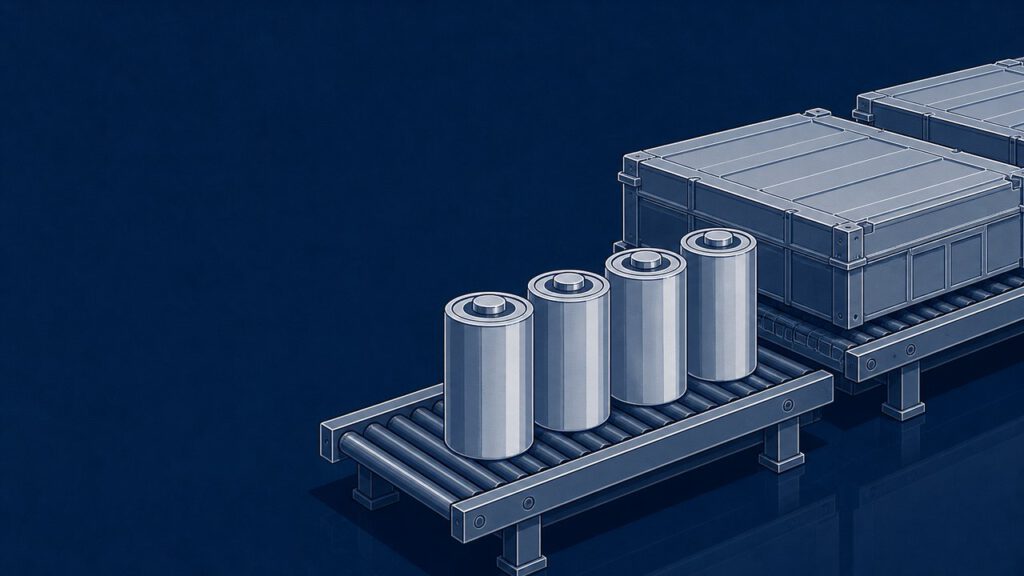

Nio Inc. is pressing ahead with its in-house large cylindrical battery cell program, with a very small batch expected to roll off production lines by year-end. Eve Energy and Gotion High-tech are expected to handle contract manufacturing, although mass production remains difficult in the near term, according to battery industry outlet Jipian Lab.
The reported arrangement continues Nio’s strategy of retaining battery research and development while outsourcing production. Founder, chairman and CEO William Li said in September that the company had invested more than 2 billion yuan ($298 million) in battery R&D, focusing its internal work on long-life large cylindrical cells.
Nio previously pursued a battery factory with planned annual capacity of 40 GWh in 2023, but later slowed equipment purchases and delayed mass production. In December 2023, Li said the company would continue research into cells, materials and battery packs while outsourcing manufacturing to reduce costs.
That month, Nio unveiled its 46105 cylindrical cell for a planned 120-kWh battery pack for the ET9 executive sedan. The announced specifications included an energy density of 292 Wh/kg and support for 5C fast charging. However, the ET9 launched in December 2024 with a 100-kWh pack using prismatic cells from Contemporary Amperex Technology Co., Limited (CATL).
Nio Targets Limited Year-End Cell Output After $298 Million R&D Investment
A very small batch is expected by year-end as Nio retains cell development, outsources manufacturing and expands CATL use across its brands.
The 5-year CATL agreement announced in January broadens supply; all rows are neutral because no period-on-period change is reported.
Jipian Lab said Nio’s cylindrical cell specifications have since changed and are no longer limited to the 46105 format, meaning the previously announced figures may not reflect the latest design. Li said on August 7 that the 120-kWh pack remained under development and would be compatible with all Nio main-brand models, without providing a launch date.
Nio is also expanding its use of CATL batteries. The companies announced a five-year agreement in January covering long-life batteries and battery-swapping technology. Firefly introduced a 60-kWh pack on October 23 using CATL’s Qilin Battery technology, with a stated CLTC range of 560 kilometers (348 miles). Firefly’s existing 42-kWh battery is supplied by Sunwoda.
Source: CnEVPost