

Every few months, another company announces that the solid-state battery — long promised, rarely delivered — is finally here. Most of those announcements describe a laboratory result. HPB – High Performance Battery is making a different kind of case. Its cell is ready for the factory floor, and the fastest way to scale it is to license the technology rather than build the factories.
That choice sets HPB apart from most of the solid-state field. The German-Swiss developer — research and patents held in Bonn, the holding company in Teufen, Switzerland — has no plans for a gigafactory of its own. Its product is the technology itself, licensed to manufacturers who build and run the production lines locally. It is a model closer to ARM in semiconductors than to the vertically integrated cell makers that dominate the industry today.
The underlying technology is equally unusual. HPB’s inorganic electrolyte is never inserted into the cell, it forms inside it, through a controlled chemical reaction — liquid when applied, hardening in place. What comes out is a cell that does not burn, contains no cobalt, works from −40 °C to +60 °C, and has passed 12,500 full cycles on test cells that are still running. The basic patents are protected in 96 countries, and production licenses are already in place in India and Germany. Which leaves a hurdle that is no longer a technical one.
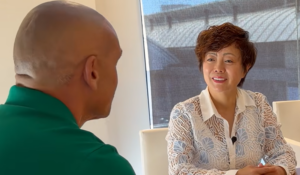
I interviewed HPB CEO Dr. Sebastian Heinz about where the technology came from, why HPB licenses rather than manufactures, the evidence behind its performance and sustainability figures, and the single milestone that now stands between HPB and the “green key” it wants to become.
Interview
How did HPB and its technology, what you call the “penicillin moment,” first come together?
Dr. Sebastian Heinz: HPB grew out of more than 30 years of fundamental research by our founder, Prof. Dr. Günther Hambitzer. His 1989 doctoral thesis traced battery ageing to side reactions in the electrolyte, and his 1995 habilitation laid the basis for a new high-energy system.
Almost by accident, while studying these mechanisms, he discovered a solid-state electrolyte that forms inside the cell, which we call our “penicillin moment.” From it grew our vision: to solve aging at its chemical root and make storage safer, more durable and sustainable.
Your electrolyte forms inside the cell like a multi-component glue. Why does that solve the hurdles of mass-producing solid-state batteries?
Dr. Sebastian Heinz: Most developers try to insert a pre-fabricated solid electrolyte into the cell, which is very hard to do at scale without defects. Our approach is different. The HPB electrolyte forms inside the cell through a controlled chemical reaction, like a multi-component adhesive that is liquid when applied and then hardens in place.
Working with liquid raw materials brings a second decisive advantage. It lets us rely on similar production technology to the one already used to manufacture conventional lithium-ion batteries with liquid electrolytes. This means our HPB Solid-State Battery can be scaled up without reinventing the wheel for manufacturing processes.

Those are bold figures. Have the 12,500 cycles and the safety claims been independently verified, and are they measured on real cells or laboratory samples?
Dr. Sebastian Heinz: These are not simulations. The 12,500 cycles come from real cells running continuously for more than three years under harsh conditions: full 0 to 100% charge and discharge at a C-rate of 1C/1C. Those test cells have not yet reached end of life, so the figure keeps rising, while a comparable lithium-ion cell typically needs replacing after about 1,250 cycles under comparable conditions.
We publish the spec sheet, cycle-life data and abuse tests openly, and cell-level verification is part of every licensee qualification.
You license your technology rather than building gigafactories. How does that accelerate scaling, and how do you keep quality consistent across partners?
Dr. Sebastian Heinz: We are a technology developer, not a manufacturer. Building gigafactories would tie up enormous capital and slow us down; licensing lets our technology reach many markets in parallel, through partners who know their local markets. We grant market, manufacturing and component licenses.
Quality is safeguarded contractually and technically: licensees follow our defined process specifications and validation protocols, with support from our experts. And because the electrolyte forms through a defined reaction rather than delicate handling, it is inherently robust and reproducible across sites.
Your cells last roughly ten times longer than conventional lithium-ion. How does that disrupt traditional battery economics?
Dr. Sebastian Heinz: With over 12,500 demonstrated cycles, an HPB cell can last around ten times longer than conventional lithium-ion batteries under comparable conditions. Storage becomes an asset that runs for decades rather than a part replaced every few years, so the lifetime cost per stored kilowatt-hour falls dramatically.
For grid and industrial operators that means fewer replacements, less downtime and less waste, shifting the decision from upfront price to total cost of ownership, where a long-life, safe battery wins.
Solid-state is usually associated with longer EV range. Your energy density is around 150 Wh/kg and your focus is stationary storage. Why that choice?
Dr. Sebastian Heinz: We made a deliberate trade-off. At up to 150 Wh/kg, our energy density is modest next to LFP EV cells, but for stationary storage weight matters far less than lifetime, safety and cost. There, our strengths are decisive: a cell that lasts roughly ten times longer, does not burn, and works from minus 40 to plus 60 degrees Celsius (−40 to +140 °F).
Stationary storage is itself a huge, fast-growing market central to the energy transition. For automotive customers who need energy density, we license the electrolyte separately for their own development.
China’s export controls on lithium, cathodes and graphite have exposed supply-chain risks. How does your cobalt-free technology insulate licensees?
Dr. Sebastian Heinz: Recent Chinese export controls on lithium, cathode materials and graphite have exposed how concentrated the supply chain is. Our chemistry is cobalt-free and avoids the critical, geographically concentrated materials that create these chokepoints.
For our licensees that is a structural advantage: they can build more local, resilient supply chains and cut exposure to geopolitical risk and price shocks. Combined with a licensing model that keeps production close to demand, it helps Europe, the US, and many other countries globally strengthen their supply-chain independence.
Why is HPB backed by private investors rather than subsidies or venture capital, and how does that protect your technological sovereignty?
Dr. Sebastian Heinz: HPB is backed by a committed base of private investors rather than large state subsidies or classic venture capital. That was deliberate. It keeps us independent and lets us pursue a long-term research agenda without pressure for a quick exit or compromises on our IP.
It also protects our independence and control over our core IP: our basic patents are protected in 96 countries, and control over them stays with the company.
You require a proven 50% better life-cycle balance and work with the recycler cylib. How do partners react, and how does your chemistry aid recycling?
Dr. Sebastian Heinz: Sustainability must be proven, not claimed. We require every licensee to run a cell-level life-cycle assessment and demonstrate an environmental balance at least 50% better than conventional cells. Partners respond positively; increasingly it is a competitive advantage that aligns with tightening EU regulation.
We also design for end-of-life from the start: with the recycling specialist cylib we are evaluating how our inorganic chemistry lets value-bearing materials and active masses be separated and recovered more easily, closing the loop.
Looking ahead, what is the biggest hurdle still to clear, and the key milestone HPB must reach to become the “green key” to a reliable, sustainable energy transition?
Dr. Sebastian Heinz: In most large solid-state programmes capital is not the constraint. The real hurdle appears in scaling, where these approaches have to work against the limits of physics to bring a pre-fabricated solid electrolyte into reliable contact with the electrodes at production speed.
Our drop-in process is different. Because the electrolyte forms inside the cell through a chemical reaction, we can work with the chances of chemistry rather than overcome the hurdles of physics. For us the decisive milestone is therefore no longer a technical one.
It comes down to successfully securing the overall financing of a first series production. Achieving that is how we become the “green key” to a reliable energy transition: safe, durable, sustainable storage delivered worldwide through licensing.
Heinz’s closing point reframes the whole conversation. For most solid-state developers, the hardest problem is physical: getting a ready-made solid electrolyte into tight, reliable contact with the electrodes, fast enough for a real production line. HPB avoids that, because its electrolyte forms inside the cell rather than being inserted — which leaves a different kind of hurdle, not technical but financial: funding the first series-production line.
It raises a larger question for the whole industry: is the scarce input in batteries the technology, or the capital to manufacture it?
The groundwork is unusually well-documented for a company this size — open spec sheets, multi-year cycle data, and a partner network spanning Coperion (slurry processing), ZNL Energy (separators), cylib (recycling) and Jonas & Redmann (production engineering). And the model is already finding takers, with production licences in place in India and Germany.
The stakes reach beyond cost per kilowatt-hour. Energy storage is becoming part of Europe’s critical infrastructure — stabilising renewable-heavy grids, backing up data centres, buffering fast-charging networks — yet the raw materials, cells and systems behind it rely on supply chains concentrated in mostly one country, a dependency recent export controls have thrown into sharp relief.
This is where HPB is most interesting strategically: a cobalt-free chemistry built from less critical materials, produced by licensees close to their markets, speaks directly to that exposure. It gives European deep-tech a way to scale without raising billions to pour concrete — moving HPB from a laboratory result to a credible industrial strategy, with the financing of a first series line now the milestone clearly in view.
Figures and technical data in this interview are as provided by HPB. Battery-Tech Network thanks Dr. Sebastian Heinz for the conversation.
Julian Renpenning | Battery-Tech.Net