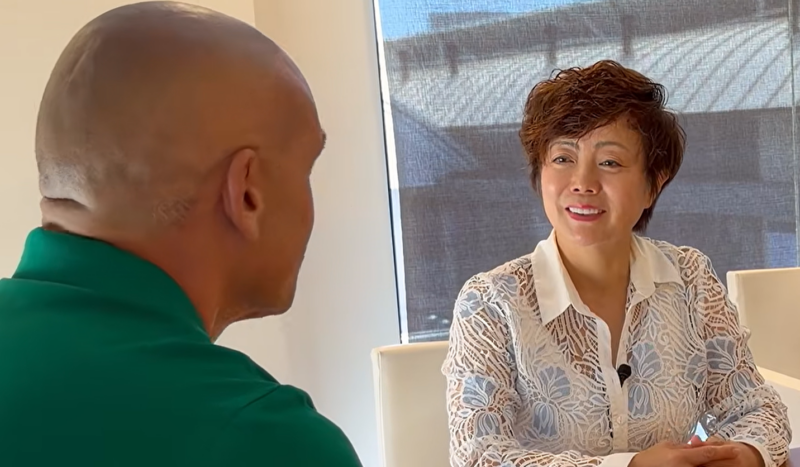

BYD plans to place a vehicle using its solid-state battery technology on the road next year, Executive Vice President Stella Li said in an interview with Carwow.es in Valencia, Spain. The company framed the announcement as a near-term technology demonstration rather than a commitment to a retail launch or mass-production schedule.
Li said BYD is studying solid-state battery technology across its research and development network, including both the cell chemistry and the manufacturing equipment needed to support production. However, she did not provide a vehicle name, production date, battery specifications, or performance data. As a result, the announcement remains focused on proving the technology in a vehicle environment.
FinDreams, BYD’s battery unit, is pursuing an inorganic sulfide solid-electrolyte pathway based on materials such as lithium phosphorus sulfur chlorine. The company has also reported 20 Ah and 60 Ah solid-state cell prototypes aimed at energy density approaching 400 Wh/kg, although cell-level results do not necessarily translate directly to pack-level performance.
The move from laboratory cells to automotive packs brings several technical challenges. Sulfide systems can offer high ionic conductivity, but solid-solid interfaces may lose contact as electrodes expand and contract, creating impedance and capacity-retention issues. Some designs therefore require sustained mechanical stack pressure, which adds complexity to pack structure and compression control. Vehicles also must withstand vibration, temperature swings, and repeated charging cycles while maintaining stable thermal and mechanical conditions.
Manufacturing is another hurdle. Conventional wet electrode processing uses solvents that can react with sulfide electrolytes, pushing development toward dry electrode methods based on PTFE fibrillation. FinDreams has worked with domestic equipment suppliers on pilot-line development, but scaling that approach to high-volume production remains a separate challenge. Moisture control is also critical, since sulfide electrolytes can generate hydrogen sulfide during hydrolysis.
BYD is also developing its solid-state program within China’s All-Solid-State Battery Collaborative Innovation Platform, a government-backed initiative linked to an estimated $830 million state R&D program. FinDreams Battery Chief Technology Officer Sun Huajun has previously outlined small-batch trials involving about 1,000 vehicles around 2027 and larger-scale commercial production around 2030. Early use cases are expected to focus on higher-end platforms, including Yangwang and flagship Denza models.
BYD Chief Scientist Lian Yubo has said liquid lithium-ion batteries and all-solid-state systems could coexist for 15 to 20 years, suggesting a gradual transition rather than an immediate replacement. Other companies are also working toward solid-state commercialization, including Toyota and Samsung SDI, but the main challenge remains moving from pilot development to reliable, scalable production.
Source: CarNewsChina