

BYD’s energy storage division has commissioned what is now Hungary’s largest battery storage facility, a project developed by Greenvolt Power. The installation, which has a capacity of 99.8 MW/288.6 MWh, went into operation following a formal ceremony attended by Hungary’s State Secretary for Energy, András Tóth.
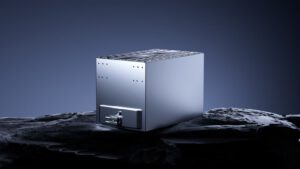
For this project, BYD supplied its MC Cube battery storage system, a 288.6 MWh solution designed for grid-level applications. According to BYD, the MC Cube features high safety standards, ultra-high integration, and rapid response capabilities. It supports functions such as frequency regulation and peak shaving, making it well suited for stabilizing large electrical networks.
Once fully operational, the facility is expected to strengthen the local grid’s regulating capacity and improve power supply reliability. These enhancements should help Hungary—and the broader Central and Eastern European region—integrate increasing amounts of renewable energy.
BYD first entered the energy storage market in 2008, leveraging its battery-cell expertise and system-integration know-how. Since then, the company has deployed large-scale storage projects in more than 110 countries and regions worldwide.
The Hungarian project underscores BYD’s growing footprint in Europe and its commitment to supporting the global transition to cleaner energy. This expansion is consistent with a wider trend of Chinese battery and storage manufacturers extending their international operations.
Last month, BYD’s energy storage arm announced a strategic cooperation agreement with Norway’s Corvus Energy AS to develop and roll out high-rate lithium iron phosphate (LFP) battery systems for maritime applications. Corvus Energy, headquartered in Bergen, holds a leading share of the global marine zero-emission energy storage market.
Other Chinese firms are also stepping up overseas activity. Eve Energy recently secured an 8 GWh storage order with India’s GNEPL, while Trina Storage signed a deal for a 160 MWh grid-level project in Japan’s Kyushu region. Trina’s installation, based on its in-house Elementa 2 system, is slated for equipment delivery in 2026 and commissioning in 2027.
Source: CNEV Post