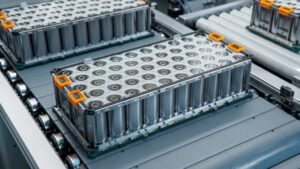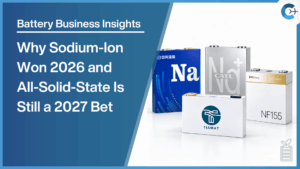
Battery manufacturer CATL is advancing its dual-track approach to lithium and sodium-ion batteries, projecting that between 10,000 and 20,000 electric vehicles will be equipped with its sodium-ion cells by the end of 2026. The forecast was shared by Ni Jun, CATL’s Chief Manufacturing Officer, at the World Economic Forum in Dalian.
In parallel with its automotive supply plans, CATL introduced its new ‘Tener Sodium’ energy storage system this week. Initial deliveries are slated to begin in China this September, with global shipments expected to follow in June 2027.
Over the past decade, the company has invested nearly 10 billion yuan (approximately 1.5 billion USD) in sodium-ion research and has expanded its R&D team by more than 300 members. According to Gao Huan, CATL’s Chief Technology Officer, these efforts have boosted the energy density of its sodium-ion cells by around 50%. The technology has reached what CATL describes as a “milestone stage,” with mass production scheduled to start in the fourth quarter of this year.
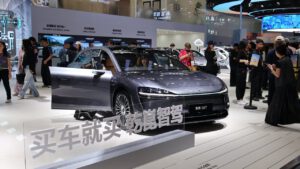
A key advantage of the new sodium-ion batteries is their performance in extreme cold. CATL reports that the cells can operate normally in temperatures ranging from –20 °C to –30 °C, opening opportunities in regions with harsh winter climates, such as northern North America, Canada, and parts of Japan. Real-world tests conducted in February at a proving ground in Yakeshi, Inner Mongolia, demonstrated the batteries’ ability to power Changan vehicles over icy roads and steep terrains. Observers from the Oxford Sustainable Finance Group described these trials as a “breakthrough moment” for sodium-ion technology. Changan plans to begin sales of models equipped with these batteries by mid-year.
The renewed interest in sodium-ion batteries is driven in part by dramatic fluctuations in lithium carbonate prices, which rose by nearly 190% in China between June 2025 and April 2026. By leveraging abundant sodium resources, CATL aims to hedge against raw-material price volatility and enhance supply-chain resilience. The company anticipates that, by the end of 2026, the cost of its sodium-ion batteries will be on par with that of conventional lithium-ion cells.
Source: CarNewsChina