

China’s electric vertical takeoff and landing (eVTOL) industry is advancing toward commercial deployment, supported by next-generation solid-state battery technology and expanded manufacturing capacity. During the current Five-Year Plan, the country aims to establish a low-altitude economy as a pillar industry, with eVTOLs bridging aviation and automotive sectors for passenger transportation beyond industrial drone use.
In Guangzhou, a new intelligent manufacturing facility combining automotive and aviation standards has opened its doors, targeting annual output of 100 two-seat multicopters with a 30-km maximum range. Priced at up to 1.68 million yuan (approximately $248,300), the multicopter has drawn nearly 2,000 intent orders from tourism and sightseeing operators. GAC’s Govy AirCab is completing airworthiness certification and is expected to enter production once regulatory approvals are secured.
EHang’s EH216 series has already become the first certified autonomous passenger-carrying eVTOL in China, operating sightseeing flights in Guangzhou and Hefei. Industry experts point to developments in airspace management, infrastructure, operational scenarios, and regulatory frameworks as key factors driving early commercial operations.
Larger eVTOL designs are also under development. A six-seat electric aircraft in Chengdu is undergoing certification testing with a 200-km range and 230 km/h top speed for urban and regional routes. In Guangzhou, a lift-and-cruise prototype combines vertical-lift rotors with a separate pusher-propulsion system to enhance cruise efficiency for cross-city, coastal, and mountainous travel.
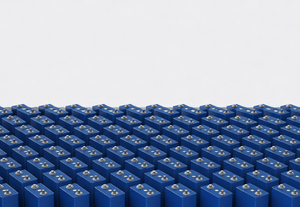
Battery energy density and safety remain critical challenges. Solid-state batteries, which replace liquid electrolytes with solid materials, offer reduced fire risk and higher energy density. A joint EHang and Inx Energy lithium-metal solid-state battery (480 Wh/kg) powered an EH216-S on a continuous 48-minute flight, boosting endurance by up to 90% over conventional systems. This technology also enabled a 22-km cross-Qiongzhou Strait flight.
Manufacturers such as Xpeng AeroHT and BYD are preparing pilot production of solid-state cells by 2027, while major battery suppliers including CATL and BYD continue investing in next-generation chemistries. Despite this progress, liquid lithium-ion and semi-solid-state batteries are likely to dominate near-term deployments due to ongoing challenges in manufacturing yield, materials engineering, durability, and cycle life.
Source: CarNewsChina (https://carnewschina.com/2026/06/08/solid-state-batteries-power-22-km-cross-strait-evtol-flight-as-china-eyes-commercial-scale-up/)