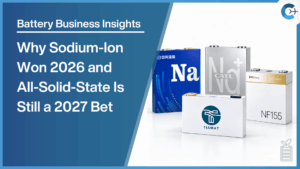
On July 1, 2026, China’s new national standard for solid-state batteries took effect, requiring automakers and battery suppliers to meet stringent testing and certification criteria. The regulation mandates that cells undergo a six-hour, 120°C vacuum chamber test to measure volatile mass loss. To earn an official all-solid-state designation, remaining liquid electrolyte must account for less than 5% of total cell weight. This framework aims to eliminate ambiguous “semi-solid” or “liquid-solid” marketing claims and ensure that manufacturers have production-ready lines.
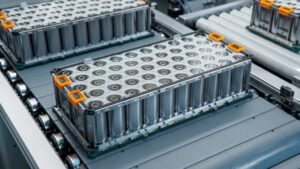
Following implementation, Doctex has become the first company to commission a gigawatt-scale facility in Tianjin producing certified solid-state cells at 350 Wh/kg. These cells, designed for direct integration into production vehicles, deliver an estimated 15%–20% range increase without altering module dimensions. In contrast, Saike Power is still constructing its 0.1 GWh sulfide pilot line in Yibin, with full machine testing expected in late 2026. This disparity highlights varying progress across China’s battery suppliers.
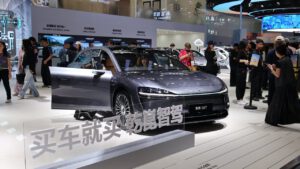
State-backed automaker Dongfeng Motor is advancing a 0.2 GWh oxide-polymer hybrid cell manufacturing plant, targeting vehicle integration in the second half of 2026. Dongfeng reports that its cells achieved 350 Wh/kg, enabling up to 1,000 km of range. They also passed high-temperature (170°C) bake tests and winter trials in Mohe, retaining 72% capacity. The company plans to deploy 100 demonstration vehicles in Hubei province to collect real-world performance data before broader commercial rollouts. Meanwhile, Changan and Geely aim to complete pack layout integration and full vehicle validation by Q3 2026.
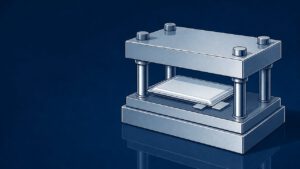
On the supply chain front, Gotion High-Tech finalized pilot verification using 100% domestically sourced machinery, including slot-die coaters and high-pressure rollers, reducing reliance on international equipment and lowering expansion costs. However, industry analysts caution that scaling solid-state production remains capital-intensive, with estimated equipment expenses of 400–500 million yuan per GWh and a total expected equipment bill of 59.2 billion yuan. According to a recent industry review, challenges in solid-interface resistance suggest that widespread commercialization may not occur until around 2030, leaving liquid-electrolyte batteries as the near-term workhorse. Localized manufacturing and targeted pilot fleets are seen as key strategies for long-term solid-state adoption.
Source: CarNewsChina