

At the National Science and Technology Awards ceremony in Beijing on July 8, 2026, battery expert Chen Liquan was honored with the country’s highest scientific accolade for his pioneering work in cell manufacturing. In his acceptance speech, Chen urged automakers and suppliers to accelerate the development of alternative battery chemistries—particularly sodium-ion technologies—to reduce reliance on imported lithium and strengthen domestic supply chains.
Chen emphasized that long-term industrial security cannot be achieved by merely adapting foreign designs. Instead, he called for independent material innovation to mitigate exposure to volatile mineral markets and protect vehicle production against international trade disruptions. Presentations at the event showcased new manufacturing platforms optimized for large-scale logistics, highlighting processes that leverage widely available regional materials.
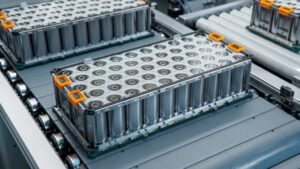
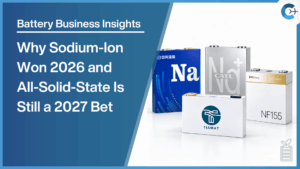
On the hardware front, industry players are shifting raw-material inputs to support sodium-ion cell production. Suppliers are increasingly using locally sourced carbon to produce sodium battery coal anodes as a cost-effective alternative to synthetic graphite. Recent testing indicates that mass-produced sodium cells are approaching the economics of established lithium iron phosphate options. Official figures show that a joint sodium-ion cell line operated by leading manufacturers achieved a production cost of $0.051 per watt-hour, with energy densities reaching 175 Wh/kg—sufficient for demanding commercial and heavy-duty applications.
In Wuhan, Hina Battery is scaling up these advances through a dedicated 2 GWh sodium-ion pack line. The facility is designed to supply regional commercial transport operators and over 115,000 cargo vessels along the Yangtze River. Field data demonstrate that these packs retain 90% capacity at –20 °C, addressing cold-weather performance challenges for fleets such as Dongfeng Commercial Vehicles.
Market data for May 2026 underscores the urgency of diversifying battery chemistries: the top supplier recorded 33.08 GWh of installations (46.7% share), followed by the second-largest at 11.87 GWh (16.8%). Mid-tier companies held between 6.3% and 3.7% of the market, with smaller firms filling out the remainder. The industry’s pivot toward sodium-ion and other alternative technologies reflects a strategic effort to secure critical components for the next generation of electric vehicles.
Source: CarNewsChina