

Researchers at the MEET Battery Research Center at the University of Münster have conducted a systematic investigation into how electrode porosity and compaction levels influence the performance and stability of lithium iron phosphate (LFP) electrodes produced via dry processing. Dry processing—which omits organic solvents during electrode fabrication—has been identified as a promising route to lower costs and reduce environmental impact compared with traditional wet processing. However, until now, detailed insights into how porosity affects ion and electron transport in dry-processed electrodes have been limited.
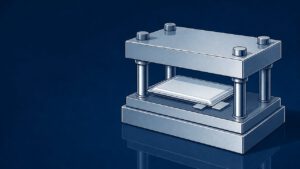
In their study, the team varied the compaction pressure applied during electrode manufacturing to create LFP electrodes with different porosities. They found that electrodes with approximately 40 percent porosity achieved the best compromise between energy density and ionic conductivity. Moderate compaction improved electron pathways, enhancing conductivity, but excessive compaction reduced the interconnected pore network and impeded lithium-ion movement, leading to performance losses. “While moderate compaction improves electron transport, excessive compaction hinders the movement of lithium ions through the electrode and leads to a loss of performance,” explained MEET scientist Simon Raffenberg.
The researchers also explored post-calendering—applying an additional calendering step after electrode lamination—to fine-tune the pore structure. Historically used in wet-processed electrodes, post-calendering in dry processing enabled precise adjustment of electrode density and pore geometry without resorting to solvents. Dr. Markus Börner, head of the Cell System division, noted that this approach offers new opportunities to optimize dry electrode architectures for both performance and sustainability.
These findings indicate that both granule formation and calendering steps are critical to producing high-performance, dry-processed battery electrodes with reduced environmental footprint. By identifying an optimal porosity range and demonstrating targeted structural control, this work paves the way for more sustainable manufacturing of lithium-ion batteries. The full study, authored by Simon Raffenberg, Dr. Markus Börner, and Prof. Dr. Martin Winter, is published in the Journal of Power Sources.
Source: Journal of Power Sources