
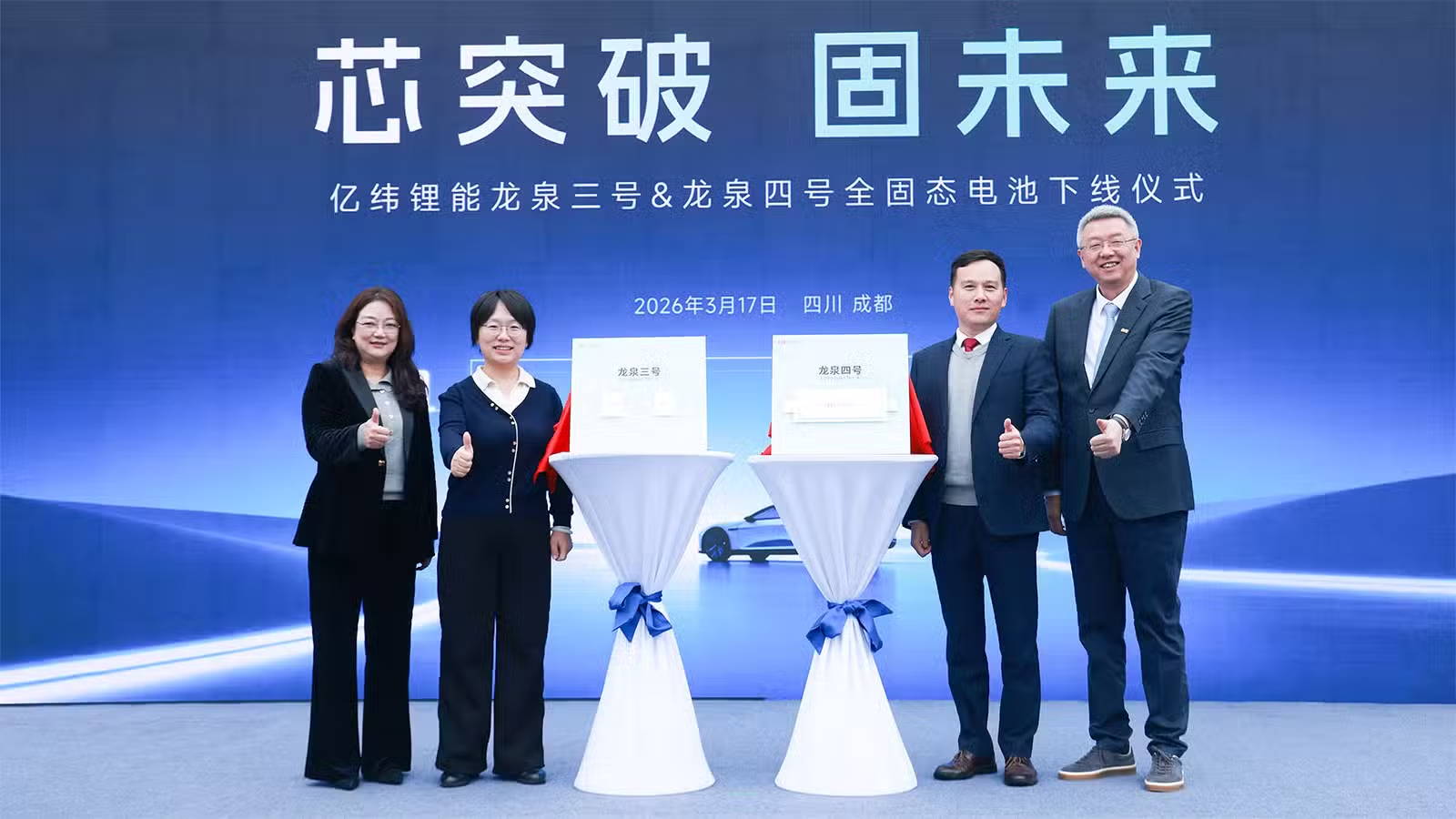

Chinese battery manufacturer Eve Energy has advanced commercialization of all-solid-state technology with the official launch of two new battery models, Longquan No. 3 and Longquan No. 4, at its Chengdu facility on March 17. The unveiling ceremony, attended by senior executives, marks a pivotal development in the firm’s strategy to transition next-generation cells from research and development into volume production.
Longquan No. 3 is engineered for consumer electronics, delivering high volumetric energy density and stable operation under low pressures below 2 megapascals (MPa). Longquan No. 4 targets the electric vehicle sector, featuring a 60 ampere-hour (Ah) capacity and demonstrated cycling capability under pressures up to 5 MPa. These pressure-tolerant designs underscore the potential for practical deployment in their respective markets.
This rollout builds on Eve Energy’s expansion since 2022, when it commissioned a 9 GWh conventional battery line in the Chengdu Economic and Technological Development Zone and initiated construction of a dedicated solid-state battery production base. The site now hosts a product portfolio spanning consumer, power, and energy storage applications, with uses ranging from electric vehicles and low-altitude aircraft to humanoid robotics.
By 2025, the Chengdu base had formalized manufacturing processes for all-solid-state cells between 10 and 60 Ah, culminating in the release of the Longquan No. 2 solid-state battery in September 2025 for robotics, aviation, and AI applications. Currently, the facility occupies 11,000 square meters and is on track to achieve an annual capacity of 100 GWh by December 2026, leveraging both sulfide and halide electrolyte technology pathways.
According to SNE Research, Eve Energy was the world’s eighth-largest electric vehicle battery supplier in 2025, securing a 2.6% market share. The company’s continued investment in solid-state electrolyte technologies highlights its commitment to advancing the scalability and performance of next-generation battery systems.
Source: CNEV Post