
Welcome back to this week’s Battery Business Insights article on BYD’s second-generation Blade Battery. On March 5, BYD chairman Wang Chuanfu unveiled what could be the most significant advancement in lithium iron phosphate battery technology in recent years. The announcement comes as the world’s largest EV manufacturer seeks to regain sales momentum after six consecutive months of year-over-year declines. With charging times that approach the convenience of gasoline refueling and range exceeding 1,000 km in select models, the Blade Battery 2.0 represents BYD’s attempt to eliminate the final objections to electric vehicle ownership.
By the Numbers: Performance Specifications That Redefine LFP Batteries
Fast Charging Meets 1,000+ km Range
BYD’s second-generation Blade Battery combines LMFP chemistry, ultra-fast charging, improved cold-weather performance, and lower cost to tackle key EV adoption barriers.
The second-generation Blade Battery delivers measurable improvements across every performance metric:
- Charging speed: 10-70% in 5 minutes, 10-97% in 9 minutes using 1,500 kW flash charging at 1,000V
- Energy density: 190-210 Wh/kg at cell level, a 5% increase over the first-generation Blade Battery
- Range: 1,006 km CLTC in the Yangwang U7 (150 kWh pack), 1,036 km in the Denza Z9GT
- Cold weather charging: 20-97% in 12 minutes at -30°C, only 3 minutes slower than at room temperature
- Capacity retention: Greater than 85% at -20°C, with 2.5% improved capacity retention guarantee
- Standard charging: 30-50% faster than conventional EVs on existing 4.8 million public charging piles
- Safety testing: Passed nail penetration test after 500 flash-charging cycles with no smoke or flames
- Cost reduction: 15% lower production cost compared to first-generation battery
- Infrastructure rollout: 20,000 flash charging stations planned in China by end-2026, with 4,239 already operational
Six Years Between Major Updates
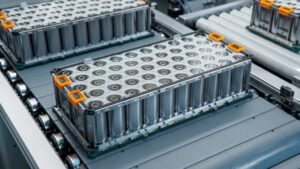
BYD launched the original Blade Battery in March 2020, introducing a cell-to-pack design that eliminated traditional battery modules. The prismatic lithium iron phosphate cells measured 96 cm long, 9 cm high, and 1.35 cm wide, arranged directly into the battery pack to maximize space efficiency. That first generation achieved approximately 140-150 Wh/kg energy density at the cell level and became the foundation for BYD’s rapid growth from 130,000 EVs sold in 2020 to 3.76 million vehicles in 2025.
The chemistry remained largely unchanged through incremental updates over the following years. While competitors introduced faster-charging LFP variants and higher-density nickel-manganese-cobalt batteries, BYD focused on scaling manufacturing and reducing costs. The company became the world’s second-largest battery producer and secured supply contracts with Tesla, Toyota, and other automakers.
By late 2025, the first-generation Blade Battery’s limitations became apparent. Energy density lagged behind CATL’s Shenxing battery and other advanced LFP chemistries. Charging speeds topped out at 3C rates, requiring 30-40 minutes for a 10-80% charge. With domestic EV sales slipping and newer Chinese manufacturers offering faster-charging alternatives, BYD needed a technology refresh to maintain its position.
LMFP Chemistry and Flash Charging Infrastructure
The second-generation Blade Battery introduces lithium manganese iron phosphate chemistry, adding manganese to the traditional LFP formulation. This modification increases energy density to 190-210 Wh/kg at the cell level while maintaining the thermal stability and safety characteristics that made LFP popular for mass-market EVs. The chemistry change also reduces production costs by 15% compared to the first generation, supporting BYD’s goal of deploying the technology in vehicles priced between 100,000-200,000 yuan ($14,000-$28,000).
The battery supports 8C fast charging, enabling the 5-minute 10-70% charging time that BYD markets as “flash charging.” Wang Chuanfu explained that the system intentionally stops at 97% capacity during rapid charging sessions, reserving the remaining 3% for regenerative braking energy recovery. This approach reduces overall energy consumption during normal driving.
BYD is deploying dedicated flash charging infrastructure to support the new batteries. Each station features T-shaped charging guns delivering 1,500 kW at 1,000V, with compact designs that include waterproof protection. The company plans to build 20,000 stations across China by the end of 2026, including 2,000 on highways spaced approximately every 100 km. As of March 5, 4,239 stations were already operational. The infrastructure uses a “station-within-a-station” model that incorporates energy storage batteries to reduce grid strain during peak charging periods.
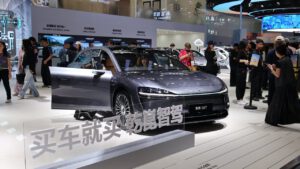
Ten BYD models will receive the battery initially, led by the Yangwang U7 luxury sedan and Denza Z9GT. Updated versions of the BYD Seal, including the Seal07 and Seal08, are also confirmed for the new battery. Models across BYD’s Dynasty series, such as the Tang L and Han L, are expected to follow.
Charging Performance in Normal and Extreme Cold
BYD positions Blade Battery 2.0 as a solution to two of the biggest EV pain points: long charging times and winter performance loss.
Flash Charging Timeline
Cold-Weather Snapshot
Removing the Barriers to EV Adoption
The Blade Battery 2.0 addresses three persistent objections to electric vehicle ownership: charging time, cold-weather performance, and upfront cost.
Five-minute charging from 10% to 70% capacity matches the refueling experience at gasoline stations. While the battery stops at 97% rather than 100% during flash charging sessions, this provides sufficient range for most driving needs. The Yangwang U7’s 1,006 km CLTC range translates to approximately 825 km under the more realistic WLTP testing standard, meaning a 5-minute charge adds roughly 495 km of WLTP range. For comparison, Tesla’s V4 Superchargers deliver similar range in about 15 minutes, while most other EVs require 20-30 minutes for equivalent range gains.
Cold-weather performance has historically limited EV adoption in northern China and other cold climates. Lithium-ion batteries suffer reduced charging speeds and capacity loss in freezing temperatures, sometimes requiring 2-3 times longer to charge. The Blade Battery 2.0 maintains charging speeds even after 24 hours at -30°C, requiring only 12 minutes for a 20-97% charge compared to 9 minutes at room temperature. The battery retains more than 85% of its capacity at -20°C, addressing complaints from EV owners in cities like Harbin and Changchun where winter temperatures regularly drop below -20°C.
The 15% cost reduction and LMFP chemistry position the battery for mainstream deployment. Unlike nickel-manganese-cobalt batteries that require expensive raw materials, LMFP uses abundant iron and manganese. BYD’s target price range of 100,000-200,000 yuan for equipped models suggests the battery will appear in affordable vehicles like the updated Seal and Dolphin, not just premium offerings. This pricing strategy could accelerate the replacement of internal combustion vehicles in price-sensitive markets across Southeast Asia, Latin America, and Eastern Europe.
Safety and Durability: Meeting New Chinese Standards
BYD emphasized safety improvements designed to meet China’s stricter battery fire regulations introduced in late 2025. The new standards prohibit battery fires even during thermal runaway events, requiring manufacturers to demonstrate that damaged batteries will not ignite.
The Blade Battery 2.0 passed simultaneous charging and nail penetration tests after 500 flash-charging cycles without emitting smoke or flames. It also withstood bottom impact tests with 10 times the force required by China’s national standards. In thermal runaway testing, the battery endured the simultaneous short-circuiting of four cells without the pack catching fire or exploding.
The company increased the guaranteed capacity retention rate by 2.5% and now offers a lifetime warranty on battery cells. While BYD has not disclosed specific cycle life figures, industry sources suggest the battery can handle 3,000-5,000 full charge cycles, equivalent to approximately 1.2 million km of driving. This lifespan exceeds the typical service life of the vehicle itself, addressing concerns about battery replacement costs.
The improved safety profile comes from both the LMFP chemistry and refined pack design. Lithium iron phosphate chemistries have lower thermal runaway temperatures than nickel-based batteries, reducing fire risk. BYD’s cell-to-pack construction eliminates modules and associated connection points where failures often originate. The combination enables the battery to meet the stringent requirements that China now mandates for all EV manufacturers.
Infrastructure Investment Determines Success
The Blade Battery 2.0’s performance specifications are impressive, but the technology’s impact depends entirely on BYD’s ability to deploy 20,000 flash charging stations across China by year-end. Building 15,761 new stations in nine months requires completing approximately 58 stations per day—an aggressive timeline even for China’s construction industry.
The “station-within-a-station” partnership model could accelerate deployment by leveraging existing charging locations rather than securing new real estate. However, each station requires 1,500 kW power delivery and energy storage integration, which demands significant electrical infrastructure upgrades. Whether BYD can execute this buildout while simultaneously ramping battery production for ten new vehicle models remains the critical question.
For markets outside China, the battery’s advantages diminish without compatible infrastructure. BYD has not announced flash charging station plans for Europe, Southeast Asia, or other export markets. The battery’s 30-50% faster charging on standard piles helps, but falls short of the 5-minute capability that differentiates the technology. International buyers may see improved range and cold-weather performance without the headline charging speeds.
The technology positions BYD to compete more effectively against Chinese rivals like NIO, XPeng, and Li Auto, all of which have emphasized fast charging and battery swapping. Whether it reverses six months of declining sales depends on consumer perception of the infrastructure rollout and competitive pricing for mainstream models. Affordable variants priced at 100,000-150,000 yuan could stimulate demand if they match the range and charging performance of premium offerings.
Final Take
BYD’s second-generation Blade Battery demonstrates that lithium iron phosphate chemistry can deliver performance metrics previously associated only with nickel-based batteries. Five-minute charging, 1,000+ km range, and stable operation at -30°C remove the practical objections that have limited EV adoption. The 15% cost reduction and LMFP chemistry support deployment in affordable models, potentially accelerating the transition from internal combustion vehicles in price-sensitive markets. Success depends on BYD’s ability to execute an infrastructure buildout of unprecedented scale while maintaining the safety and reliability that established the Blade Battery’s reputation. The battery technology is ready—now the charging network must follow.