
The Fraunhofer-Gesellschaft officially opened the new building of the Fraunhofer Center for Energy Storage and Systems ZESS in Braunschweig on October 5, 2026. The German federal government and the State of Lower Saxony invested approximately €49.85 million in the research facility.
The center covers around 3,300 square meters, including approximately 1,750 square meters of laboratory space and a 450-square-meter drying room. The infrastructure will support research into next-generation solid-state batteries and hydrogen technologies, with an emphasis on transferring research results to industrial applications.
Fraunhofer ZESS opens facility backed by 49.85 million euros
The new Braunschweig center adds research infrastructure for next-generation solid-state batteries and innovative hydrogen technologies.
The laboratory and drying-room figures are included within the center’s total area; no change data were reported.
At Fraunhofer ZESS, the Fraunhofer Institute for Surface Engineering and Thin Films IST, the Fraunhofer Institute for Manufacturing Technology and Advanced Materials IFAM, and the Fraunhofer Institute for Ceramic Technologies and Systems IKTS are combining their expertise. Their work covers the process chain from new materials and production technologies to sustainability and the circular economy.
Fraunhofer said the center is intended to strengthen technology transfer and support the industrial scaling of battery and hydrogen technologies. The institutes will work with Technische Universität Braunschweig and industry partners, while the center will complement Lower Saxony’s existing battery and hydrogen research ecosystem. A panel discussion during the opening identified scientific expertise across the value chain, development speed, technology transfer, and economic and environmental conditions as important factors for future progress.
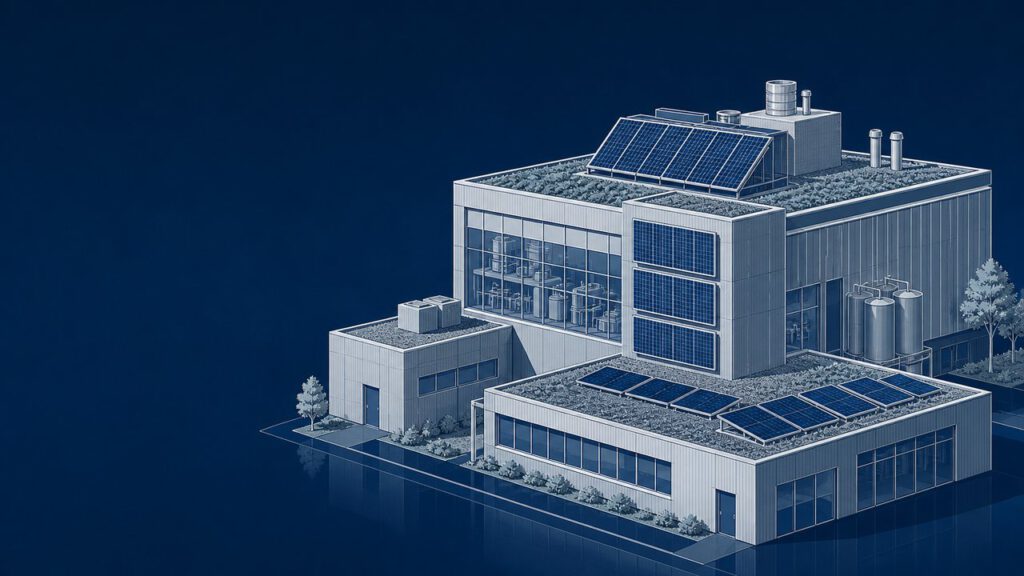
Sustainability features were also incorporated into the building. It uses a hybrid timber structure with minimal concrete, photovoltaic systems on the roof and facade, green roofs, and an energy-efficient design. Flexible research spaces and an open hall structure are intended to allow the facility to adapt to future research requirements.
Source: ist.fraunhofer.de