
LANXESS has opened a new battery laboratory at its Krefeld-Uerdingen site in Germany as part of its effort to expand its materials business for lithium iron phosphate (LFP) batteries. The specialty chemicals company said the lab is designed to accelerate development of materials for the next generation of LFP cells and support the development of Western value chains in the battery market.
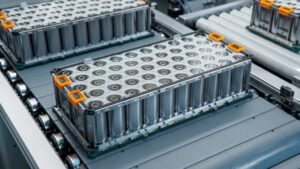
The laboratory allows LANXESS to test material properties directly in battery cells, giving the company and its customers a faster way to evaluate how iron oxide and iron phosphate grades affect cell performance, processability, and suitability for specific applications. According to the company, this closer link between material development and cell testing is intended to provide earlier insight into whether a material will work in a real cell assembly.
The lab’s equipment is also suitable for other battery chemistries, including sodium-ion batteries, which use sodium iron pyrophosphate as a cathode material.
Murat Gürsoy, head of innovation for iron oxides and iron phosphate at LANXESS, said cell manufacturers are looking beyond raw material availability and also focusing on processing reliability and contributions to cell performance. He said the new laboratory is meant to address those requirements by bringing material development and cell testing closer together.
LANXESS said the market for LFP batteries is expanding rapidly worldwide. The company noted that LFP batteries are already widely used in electric vehicles in China, while demand in Europe is expected to increase significantly by 2030. Growth is also being driven by stationary energy storage systems for renewable energy, data centers, and critical infrastructure.
The company described itself as a leading Western producer of iron oxide with more than 100 years of experience in the field. It has developed specialized iron oxide grades for use as raw materials in LFP cathode material synthesis, and these battery grades are already on the market. LANXESS also developed iron phosphate as another LFP battery precursor using iron and phosphoric acid, which it said offers environmental advantages over processes that generate large amounts of saline wastewater.
In addition to precursor materials, LANXESS offers chemicals for electrolyte salts, purification and processing of battery raw materials, thermal management, fire protection, and recycling applications across the battery value chain.
Source: LANXESS