
LG Energy Solution and Seoul National University said on Sept. 7, 2026, that they have identified a key approach to improving the stability of next-generation lithium manganese-rich batteries, or LMR batteries. The joint study, led by Professor Jongwoo Lim and his research team in Seoul National University’s Department of Chemistry, was published in Nature Communications and is intended to support the use of LMR batteries in large-format electric vehicle cells.
LMR batteries are viewed as a promising cathode chemistry because they can reduce material costs by relying primarily on manganese and do not require cobalt. They also offer high energy density by storing energy through transition metals and oxygen in the cathode material. However, a major commercialization challenge has been gas generation caused by incomplete oxygen recovery during charging and discharging, which can damage internal structures and increase pressure in large-format cells.
In the study, the researchers examined oxygen redox behavior under different operating conditions and found that oxygen recovery depends on both the upper cutoff voltage during charging and the discharge cutoff voltage during discharge. Lowering the upper charging voltage from 4.6 volts to 4.3 volts increased the reduction of oxidized oxygen from 86% to 97%. The team also found that reducing the discharge cutoff voltage from 3.0 volts to 2.0 volts allowed oxygen to return to nearly its original state.
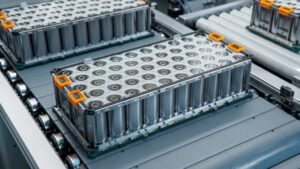
Using those findings, LG Energy Solution redesigned the operating voltage range and formation process for 40 Ah-class large-format LMR cells. The company also applied a lower-temperature formation process to help suppress gas generation in the cells. In testing, the optimized cells retained 92.2% of their initial energy after 883 charge and discharge cycles.
According to the companies, the results strengthen the case for commercializing LMR materials in large-format EV batteries and extend their potential beyond small-format applications.
Source: LG Energy Solution