

Researchers at the Chair of Production Engineering of E-Mobility Components (PEM) at RWTH Aachen University are advancing a melt-coating technique for producing ultra-thin lithium metal anodes under the EXIST research transfer project “LIMA.” Traditional manufacturing methods rely on complex, multi-stage rolling processes and lamination, which limit achievable thicknesses and generate significant material waste when foils are thinned from 100 micrometers to the 20–25 micrometers often required in high-energy applications.
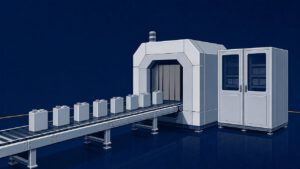
The new process applies liquid lithium directly onto a substrate foil, eliminating the need for mechanical post-processing and lamination. A lithium ingot is melted and precisely metered onto the carrier material, allowing for tight control over the final layer thickness. This approach not only reduces raw material consumption but also offers enhanced electrochemical performance thanks to the uniformity and purity of the deposited layer.
Ultra-thin lithium metal anodes are considered a vital component for next-generation solid-state batteries owing to their potential for significantly higher energy densities. This increase is critical for extending the driving range of electric vehicles and enabling electrification in sectors such as aviation and maritime transport, where current lithium-ion systems are approaching physical limits with graphite anodes.
“The new technology has the potential to create a European independent production capacity for lithium metal anodes,” says PEM Director Professor Achim Kampker. The project team, which plans a spin-off company under the EXIST program, includes researchers Gerrit Bockey, Jonas Gorsch, Junia Dietert, and Hendrik Minis Pai. The program aims to transition laboratory results into a viable business model by addressing technical implementation challenges, formulating a business plan, and preparing for market entry.
Designated co-CEO of the prospective “LIMA” spin-off, PEM expert Gerrit Bockey highlights the cost advantages of melting lithium directly and leveraging its challenging material properties to achieve the desired thinness without excessive scrap. Developed during Bockey’s doctoral research, the method promises greater process flexibility and savings compared to conventional rolling and lamination techniques.
Source: PEM RWTH Aachen University