
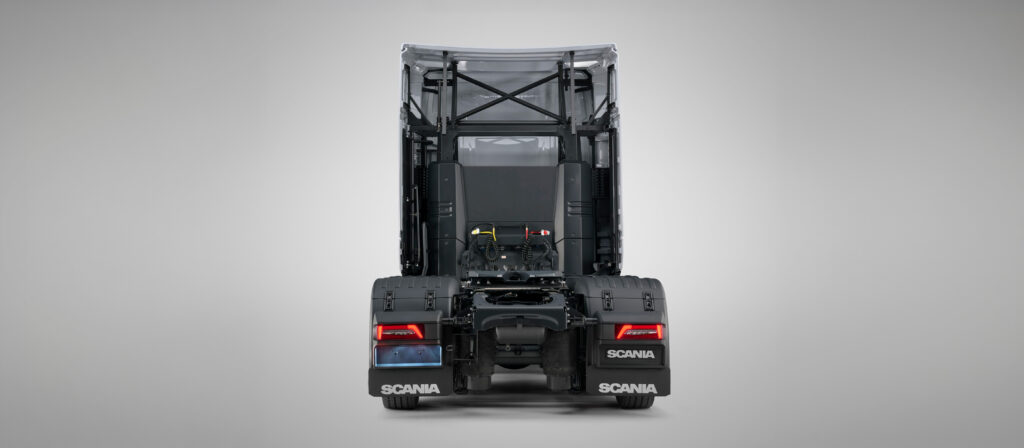

Scania is introducing an electric truck configuration designed to address one of the most difficult segments of commercial transport to electrify: long-haul operations. The setup combines expanded battery capacity, megawatt charging system (MCS) compatibility, and vehicle integration choices intended to help operators balance range, payload, charging time, and productivity. Depending on configuration and operating conditions, the vehicle can achieve up to 720 kilometers of electric range.
The solution places additional battery packs behind the cab alongside chassis-mounted batteries, increasing installed energy capacity without relying solely on batteries mounted under the cab and on the frame. In a typical configuration, two MP20 battery packs are mounted behind the cab, adding about 356 kWh of installed capacity. Scania said this arrangement supports long-haul tractor configurations for selected 6×2*4 European trailer combinations, while still maintaining practical trailer compatibility and turning performance.
The vehicle is also designed to work with Scania’s IVD, or Increased Vehicle Dimension, front, which allows the total vehicle length to exceed 16.5 meters. When combined with the new front, Scania said the battery-electric vehicle can reduce energy consumption by up to 3 percent, depending on specification and operation, because aerodynamic drag plays a larger role in total energy use for electric trucks. The company said the configuration is intended to support shorter and more productive charging stops in long-haul applications through MCS charging.
According to Lars Gustafsson, Senior Vice President and Head of Solutions Management at Scania, the approach is meant to show how range, payload, and charging can be considered together for demanding long-distance routes. Scania said the package is aimed at helping transport operators electrify routes that have traditionally been difficult to serve with battery-electric trucks.
Source: Scania