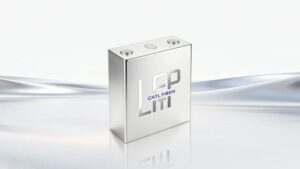


The sodium-ion battery sector is poised to shift from demonstration projects to large-scale commercial deployment, with industry observers forecasting cost parity with lithium-ion technology by late 2026. According to a report in National Business Daily, leading battery maker CATL expects to deliver its first sodium-ion energy storage systems in September, scaling annual shipments to the gigawatt-hour level.
Lin Jiubiao, CTO of CATL’s domestic energy storage solutions division, has stated that sodium-ion batteries have now reached an “era of comprehensive productisation.” Technical challenges that once hindered sodium-ion adoption—chiefly lower energy density—have been addressed through advanced electrochemical modeling. CATL has tackled mass-production issues such as moisture control in hard-carbon electrodes and gas evolution, resulting in batteries that offer broad temperature resilience and an extended cycle life of up to 15,000 cycles.
On the materials side, cathode producer Ronbay Technology reports rapid supply-chain expansion. Wang Zunzhi, general manager of Ronbay’s sodium-ion battery division, compares the current growth curve to that of lithium iron phosphate batteries in 2020. Ronbay has commenced mass production of sodium-ion cathode materials and plans to ramp capacity to 2.8 million tons by 2026, with an additional 300,000-ton dedicated line targeted for 2027.
Cost reduction remains central to market competitiveness. Manufacturers are pursuing three main strategies: product design optimization, collaborative supply-chain efficiencies, and purpose-built, high-throughput production facilities. CATL aims to match lithium iron phosphate cell costs by the end of 2026, with total system costs—factoring in integration improvements—on track to align with LFP standards by 2027.
The price of hard-carbon anode material, a critical cost component, is projected to fall from roughly 60,000–70,000 yuan per ton in 2024 to 35,000–40,000 yuan by 2026, eventually dipping below 25,000 yuan.
Experts emphasize that sodium-ion batteries will complement rather than replace lithium-ion products, finding niches in cold-climate storage, high-rate charging applications, grid frequency regulation, and light electric vehicles. Market research firm SPIR forecasts the global sodium-ion energy storage market could reach 580 GWh by 2030, with over 410 GWh dedicated to automotive applications.
Source: CarNewsChina (https://carnewschina.com/2026/06/09/sodium-ion-batteries-to-reach-cost-parity-with-lithium-by-late-2026-report-says/)