

Swiss energy company Alpiq has applied for planning approval for a 300 MW battery energy storage system in Niedergösgen, in Switzerland’s canton of Solothurn. The proposed system would provide more than 1.2 GWh of storage capacity and a four-hour duration. Alpiq said it would be among Switzerland’s most powerful battery storage systems.
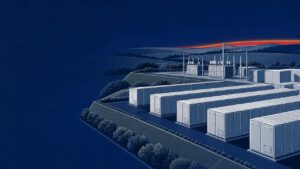
The project is planned for Alpiq-owned land in the Grossacker area, between the company’s Gösgen hydropower plant and the Old Aare river. The site is close to existing energy infrastructure and a major grid connection point. An agreement in principle with Swiss transmission system operator Swissgrid secured 300 MW of connection capacity to the national transmission grid in June.
Plans call for 72 groups of four battery containers, totaling 288 containers, along with power conversion and grid connection equipment. The project’s design and construction will be coordinated with a neighboring project for a new fish pass.
Alpiq submitted its application to the Federal Inspectorate for Heavy Current Installations, which is responsible for approving the project. A public consultation will follow the start of the approval process, and Alpiq plans to present the project to Niedergösgen residents at an information event in mid-January 2027. Construction is scheduled to begin in 2027, subject to approvals, with commissioning planned for 2029.
Alpiq seeks approval for 1.2GWh Swiss BESS
Filed on 26 November, the project goes to residents in mid-January 2027, targets construction in 2027 and commissioning in 2029, strengthening grid flexibility.
Neutral markers denote project scale, not growth; Niedergösgen would be about five times Switzerland’s largest operational BESS output.
If completed as planned, the system would have about five times the output of Switzerland’s largest operational BESS facility. The Niedergösgen project forms part of Alpiq’s strategy to expand flexible assets, including battery storage and pumped hydro energy storage. The company said in June that its secured BESS pipeline across several European markets exceeded 1 GW, and it is targeting a multi-GW operating portfolio by 2030.
Source: energy-storage.news