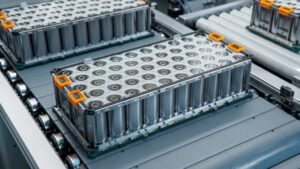


Beijing Energy Group has completed a year-long field trial of a stationary solid-state battery system installed underground in the city’s heating network, demonstrating reliable performance in extreme industrial conditions. The system operated along a 1.1-kilometer section of the Shijingshan West Chang’an Avenue extension pipeline, withstanding continuous temperatures between 40°C and 85°C and humidity levels up to 95%. It successfully completed a full winter cycle and passed a comprehensive performance evaluation conducted by the Beijing Municipal Science and Technology Commission on July 15, 2026.
Carried out under Beijing’s carbon neutrality technology program, the demonstration involved engineering support from Jingneng Technology and other energy-storage partners. Unlike laboratory tests, this deployment ran continuously inside an active heating infrastructure, offering real-world data on environmental durability. The system achieved an IP68 dust- and waterproof rating and met state-level safety standards for non-combustion and non-explosion performance under simulated fault conditions.
Developed by Pure Lithium New Energy, a solid-state battery company based in the Yizhuang Economic-Technological Development Zone, the installation builds on the firm’s first-generation battery system launched in 2025. Initially targeted at e-bike battery-swapping networks, the company aims to tackle production costs, manufacturing scalability, and commercial application barriers. According to CEO Yang Fan, this underground trial represents a significant step toward validating the technology outside laboratory settings and in specialized industrial use cases.
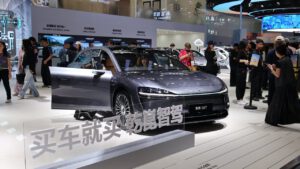
However, experts note that stationary energy storage and electric vehicle applications present distinct engineering challenges. While the Beijing project confirms solid-state battery reliability under harsh heat and humidity, automotive batteries must also meet requirements for high energy density, lightweight construction, fast charging, cost efficiency, and long-term cycle life. Major battery manufacturers remain cautious about large-scale EV adoption of solid-state cells, citing ongoing manufacturing complexities that place widespread vehicle deployment years away.
The trial aligns with China’s new solid-state battery standards, which took effect in July 2026 and aim to clarify technical definitions and performance requirements. For automakers, the next challenge will be translating demonstrated durability in stationary settings into mass-production solutions that satisfy the cost, performance, and safety demands of electric vehicles.
Source: CarNewsChina