
BYD is targeting more than 2.5 million overseas vehicle sales in 2027, according to a research note from Deutsche Bank analysts led by Wang Bin, who cited comments from company management on a post-earnings call. The outlook reflects BYD’s continued push to expand internationally through a larger shipping fleet and more production outside China.
Management has also raised its overseas sales guidance for 2026 to 1.9 million to 2.0 million vehicles. That is well above the company’s earlier target of 1.3 million set in January and the revised 1.5 million goal announced in March.
Overseas markets have become an increasingly important offset to softer domestic performance. In the first eight months of the year, BYD’s overseas sales rose 85.72% year over year to 1,162,260 vehicles, while domestic sales fell 32.72% to 1,505,755 vehicles. Total sales for the period declined 6.84% to 2,668,015 vehicles.
August was another record month for overseas deliveries, with 189,466 vehicles sold outside China. That represented a 134.45% increase from a year earlier and accounted for 43.03% of BYD’s total sales in the month. Based on its year-to-date performance, the company would need to average roughly 184,000 to 209,000 overseas sales per month over the remaining four months to meet its latest full-year guidance.
BYD said shipping capacity has constrained overseas sales this year and that volumes could have been higher with more transport capacity. To support future growth, the company plans to expand its dedicated vehicle carrier fleet, gain market share, and increase local production overseas. Its Indonesian plant has already started production, its Brazilian plant is ramping toward an annual capacity of 300,000 vehicles, and its Hungarian plant is expected to begin assembly in November or December, according to Deutsche Bank. BYD is also evaluating additional overseas manufacturing sites.
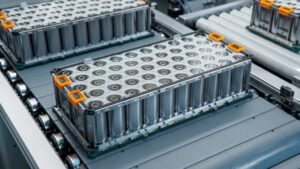
The company said profit per vehicle sold overseas was about 20,000 yuan in the first half of the year, despite currency headwinds, and expects that figure to remain broadly stable in the near term. In China, BYD is relying on flash charging technology and its network to support sales, while battery supply remains a near-term constraint. Management said the backlog for flash charging-compatible vehicles is about 250,000, and second-generation Blade Battery shortages should be fully resolved in the first quarter of 2027.
Source: CnEVPost