At the 2026 Powering the Nation Forum, CATL’s Chief Scientist Wu Kai outlined the company’s strategic focus on lithium-air battery technology for next-generation energy storage. This marks the first time CATL has publicly identified lithium-air as a key priority in its long-term development roadmap.
Lithium-air batteries, often called “breathable” batteries, use a lithium metal anode and draw oxygen from the air for the cathode reaction, reducing cell weight compared with conventional lithium-ion designs that rely on heavy metal oxide cathodes. The theoretical energy density of lithium-air systems can reach up to 12,000 Wh/kg—comparable to gasoline—and current laboratory prototypes have achieved more than 1,200 Wh/kg, over four times the 250–270 Wh/kg of mainstream lithium-ion cells and well above projections for solid-state batteries.
Successful commercialization could enable electric vehicles to travel more than 1,600 km on a single charge, effectively addressing range anxiety. However, practical implementation has been delayed since the 1970s by challenges including sensitivity to moisture and carbon dioxide, unstable catalysts and limited cycle life.
Recent breakthroughs have reignited interest. In 2024, researchers from the University of Illinois Chicago, Argonne National Laboratory and California State University, Northridge demonstrated over 700 cycles in an air-like environment. In 2025, Argonne and the Illinois Institute of Technology reported a room-temperature prototype delivering 1,200 Wh/kg and lasting 1,000 cycles, with deployment anticipated after 2030.
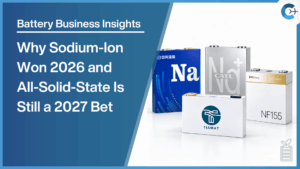
This announcement builds on CATL’s progress with sodium-ion batteries. Since proposing the concept in 2020, the company has scaled production by 2026, integrating these cells into vehicles such as the GAC Aion UT, Changan Oshan 520 and models from Geely, Chery and FAW.
CATL’s roadmap now spans mature technologies for immediate market needs, solid-state batteries to enhance performance in the mid term, and lithium-air to explore ultimate energy density limits in the long term. The company currently holds a 47.0% share of the global power battery market and delivered 121 GWh of energy storage systems in 2025, securing a 30.4% global market share.
Source: CarNewsChina