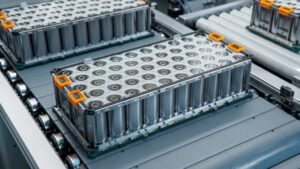

A recent joint study by the Fraunhofer Research Institution for Battery Cell Production FFB, the University of Münster’s Institute of Business Chemistry, Porsche Consulting GmbH, and Volkswagen AG highlights significant challenges for the battery recycling industry as it prepares for rapid growth. Published in the journal Nature Energy, the research indicates that by 2030 the volume of end-of-life batteries and related materials will triple, while return streams become more complex due to diverse battery types, formats, and chemistries.
The study notes that recycling infrastructure trails battery cell production expansion by roughly a decade, making the current development phase critical. Recycling firms must scale existing pyrometallurgical and hydrometallurgical processes cost-effectively, standardize and automate take-back and pretreatment operations, and refine business models to meet rising demand. Regulatory pressures such as minimum recovery rates, recycled content requirements, and extended producer responsibility further intensify the need for efficient, scalable solutions.
In the near term, around 70 percent of recycling feedstock will stem from production waste of well-established nickel-manganese-cobalt (NMC) and lithium iron phosphate (LFP) batteries. From 2030 onward, however, more than half of return materials are projected to originate from end-of-life vehicle batteries. These batteries vary widely in age, condition, cell chemistry, and design, necessitating advanced sorting, analysis, deactivation, and disassembly capabilities.
Emerging chemistries—such as sodium-ion and solid-state batteries—pose additional challenges. Sodium-ion cells can integrate into existing recycling streams but may require separate material flows, while solid-state designs demand new safety protocols and recovery approaches, according to study co-author Hannah Mittag of Fraunhofer FFB.
Economic viability is a central concern, especially for cobalt- and nickel-free chemistries where processing costs can exceed recovered material value. The authors identify seven key trends to improve recyclers’ economics: recycling-optimized battery design, second-life applications, standardized take-back logistics, automated pretreatment, specialized value chains, markets for secondary raw materials, and integrated business models across the value chain.
“As the industry ramps up toward 2030, collaboration with automakers will be essential to secure material flows and develop competitive recycling processes,” Mittag concludes.
Source: Fraunhofer FFB Press Release