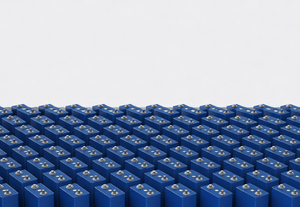


China’s battery sector is advancing solutions to address lithium-iron phosphate (LFP) battery performance losses in extreme cold, especially where winter temperatures drop below –25°C. At a research briefing by China’s Ministry of Industry and Information Technology, leading battery maker CATL detailed its new ‘One Shell, Two Cells’ platform, which supports either lithium-ion or sodium-ion modules in the same enclosure. This interchangeable design enables vehicle manufacturers, infrastructure operators and heavy-duty logistics providers to swap chemistries without altering chassis dimensions, thermal management or charging stations.
The platform is targeted at applications such as battery-swap networks, grid-scale storage and high-frequency logistics fleets operating in sub-zero environments. Operators can deploy winter-optimized sodium-ion batteries in northern regions and higher-energy lithium packs in warmer areas, all using identical physical station infrastructure. CATL’s chief scientist has confirmed that manufacturing bottlenecks for sodium-ion cells have been resolved, and future cell generations aim for a single-charge range of 600 kilometers.
The briefing also highlighted a major durability milestone: sodium-ion cells and key material inputs are now achieving 15,000 charge-discharge cycles, equivalent to a 20-year lifetime. CATL has invested nearly 10 billion yuan to overcome hard-carbon manufacturing challenges, while raw material suppliers report matching cycle life performance. Polyanion-type sodium iron phosphate materials from Ronbay Technology, for example, demonstrate the same 15,000-cycle benchmark and a compaction density of 2.5 g/cm³. Ronbay plans to scale cathode output from 6,000 to 28,000 tons by the end of 2026, targeting 300,000 tons by 2027.
To secure robust anode supplies, China’s chemical producers are shifting from imported biomass-based carbons such as coconut shell to locally abundant synthetic alternatives. Coal-based and resin-based hard carbons offer consistent performance and lower costs, with targets to reduce anode costs to below 25,000 yuan per ton within the next few years.
These developments underpin a recent 60 GWh, three-year sodium-ion energy storage agreement between CATL and HyperStrong, signaling the maturation of sodium batteries for large-scale commercial deployment. By standardizing pack architecture and material durability, China’s industry is creating a parallel ecosystem in which sodium-ion chemistry can excel where lithium faces climatic or lifecycle limitations.
Source: CarNewsChina