
Fraunhofer Institute for Solar Energy Systems ISE reported on January 1, 2026, that startup EDENenergy has delivered its first industrial storage system made with used e-scooter batteries. The 70 kWh system was delivered to a customer in mid-October and uses power electronics developed at Fraunhofer ISE.
EDENenergy Builds 70 kWh Storage From Scooter Batteries
Its first industrial system links used scooter batteries without disassembly, opening a stationary-storage route for millions of returning e-bike and e-scooter packs.
Neutral markers indicate benchmarks, not year-on-year change; tested batteries surpassed the startup’s 80 percent State of Health assumption.
The electronics allow different storage units to be connected and enable communication with battery modules without requiring their disassembly. EDENenergy is initially targeting medium-sized regional companies that operate photovoltaic systems without storage. The systems could also be used by municipal utilities to increase self-consumption, reduce peak loads or support electricity trading.
The first system interconnects 112 second-life e-scooter batteries that underwent an initial screening. EDENenergy currently obtains batteries from large suppliers, including e-bike and e-scooter fleet operators, to secure sufficient quantities of the same battery type. The company eventually plans to combine different battery types, although connectors, battery management systems and communication protocols must be adapted for each new type.
Results from the first 350 tested batteries exceeded the startup’s assumptions. EDENenergy had estimated a remaining capacity, or state of health, of 80%, but measured average remaining capacity of well above 90% in some cases. The company expects the batteries to operate for several more years in stationary systems, where they experience fewer vibrations and temperature fluctuations than in mobile applications.
EDENenergy remotely monitors the modules and can replace individual units while the storage system remains in operation. Modules that reach the end of their useful life are sent to partner companies for recycling. According to EDENenergy, this replacement approach can maintain the system’s capacity at 70 kWh after 10 years, while conventional manufacturers typically guarantee 80% of original capacity over the same period.
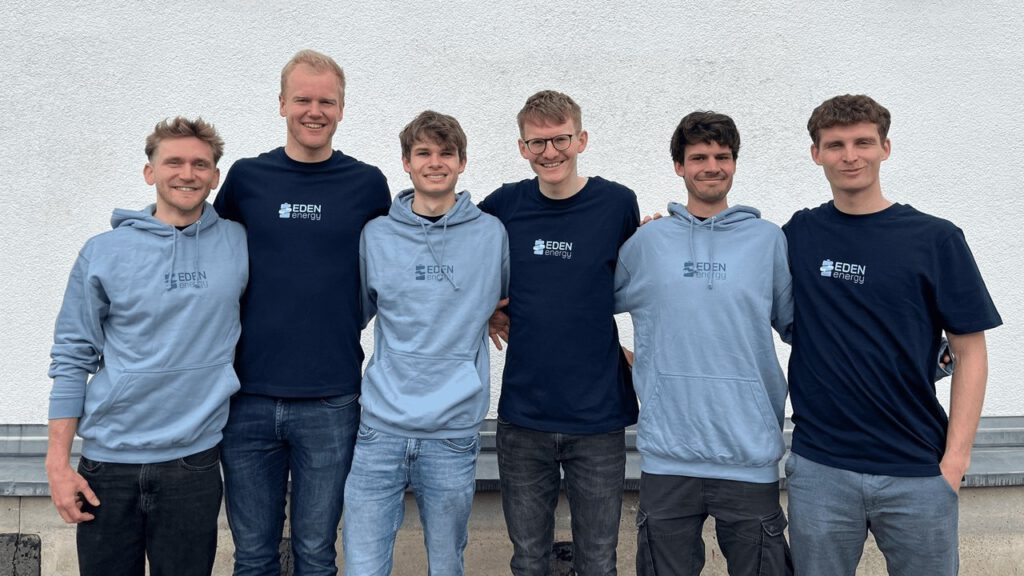
The company plans to expand its storage systems to capacities of up to 300 kWh. It is also seeking regional pilot customers that can receive 50% funding through the approved state grant program “Mittelstand trifft Start-ups.” EDENenergy currently has three founders and three part-time employees.
Source: ise.fraunhofer.de