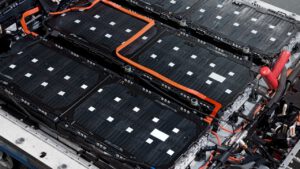
Gelion has announced a three-year collaboration with Nissan Technical Centre Europe and the University of Oxford to develop next-generation solid-state lithium-sulfur batteries for electric vehicles. The project, known as CoRe-SoLiS (Cost-effective, Resilient Solid-state Li–S), launches in June 2026 with a total budget of £3.4 million, including £2.4 million in grant funding awarded by the UK’s Innovate UK Battery Innovation Concept Development competition. Gelion’s UK subsidiary will receive £1.6 million of that grant.
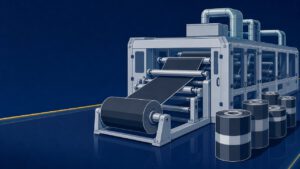
The collaboration brings together Gelion’s Nano-Encapsulated Sulfur (NES™) cathode active material, Nissan’s solid-state battery development expertise, and the University of Oxford’s advanced anode materials and cell-level integration skills. By replacing nickel and cobalt with abundant, low-cost sulfur, NES™ is designed to slot into existing manufacturing processes while boosting energy density, cycle life, and safety. The CoRe-SoLiS team aims to deliver a high-power, fast-charging, and long-duration battery pack that meets automotive performance, safety, and manufacturability targets.
Solid-state batteries are viewed as a critical step for EV electrification, offering enhanced safety by eliminating liquid electrolytes, higher energy density, and improved durability compared with conventional lithium-ion cells. Sulfur cathodes have historically been constrained by polysulfide formation, limiting power and cycle life. Gelion’s NES™ technology addresses these issues by chemically encapsulating sulfur at the nanoscale, unlocking performance levels previously out of reach for sulfur-based systems.
The UK-based project supports Nissan’s broader European electrification strategy, centered around its Sunderland manufacturing hub. It also reinforces efforts to establish a resilient domestic battery materials supply chain and positions Gelion as a potential local supplier of next-generation cathode materials. Outcomes from CoRe-SoLiS will guide future scale-up, manufacturing, and commercialization steps, with potential applications across the automotive and stationary energy storage sectors.
Steve Mahon, Gelion’s chairman, noted that the partnership with Nissan Technical Centre Europe creates a clear route to commercial revenues and the opportunity to expand UK R&D and production capabilities. John Wood, Gelion’s CEO, highlighted how combining solid-state and sulfur cathode innovations could extend battery performance boundaries. Adrien Amigues, President of Gelion UK & Europe, said the project could be a game-changer for the UK, Nissan, and Gelion by enabling seamless integration into existing and future solid-state battery production lines.
Source: Gelion News