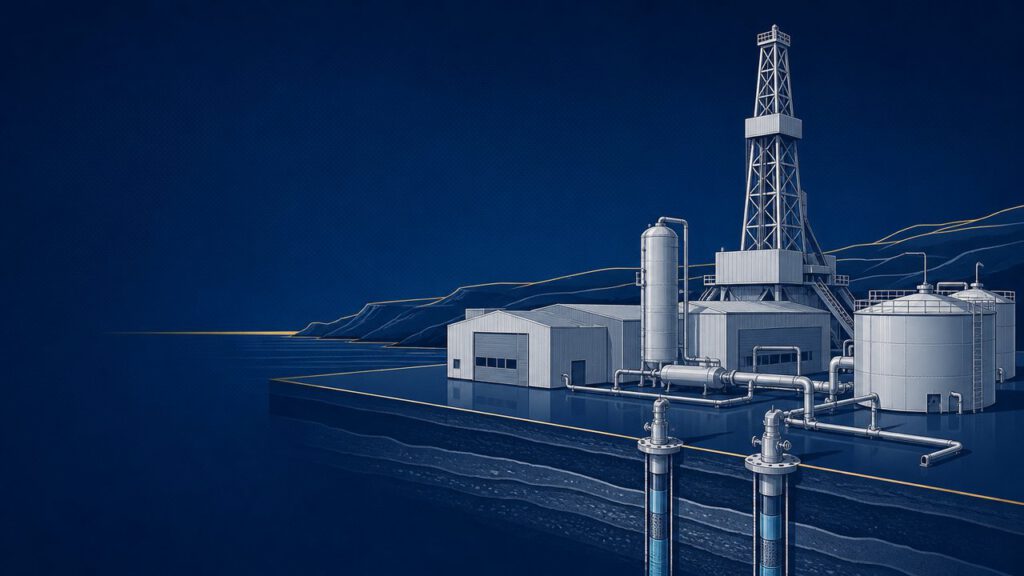

Geothermal Engineering Limited (GEL) plans to invest around £43 million in a lithium extraction facility in Cornwall, supported by an Offer in Principle worth nearly £10 million from the UK government’s DRIVE35 Automotive Transformation Fund. The project is expected to create nearly 50 direct jobs and support around 80 additional roles across the supply chain.
Commercial production is scheduled to begin in 2029. GEL expects the facility to produce around 1,500 tonnes of technical-grade lithium carbonate per year from underground geothermal brine. According to the government, that volume would be sufficient for more than 180,000 typical electric vehicle batteries. The facility could later scale to annual output in the tens of thousands of tonnes.
GEL Plans £43 Million Cornwall Lithium Extraction Plant
Government action has unlocked nearly £230 million into two projects to strengthen domestic lithium supply for automotive, clean energy and advanced manufacturing.
The projects follow £1 billion announced this month—described by Reynolds as over £1 billion of automotive investment.
The government said domestic lithium production is intended to strengthen supplies for EV battery manufacturing and support the automotive, clean energy and advanced manufacturing sectors. Lithium demand is expected to increase by 1,100% by 2035. GEL CEO Dr. Ryan Law said Cornwall’s geothermal brine could provide a reliable source of the critical mineral while building domestic lithium resources, technology and expertise.
The Cornwall project follows Tees Valley Lithium’s £185 million investment to establish a lithium refinery in Teesside, which the government described as one of Europe’s largest. That project received an Offer in Principle for £18.3 million through DRIVE35 and is expected to support hundreds of jobs.
Together, the two projects represent nearly £230 million of private investment in UK lithium production and processing, according to the government. The funding forms part of the government’s Modern Industrial Strategy and is intended to support its Critical Minerals Strategy 2035 by expanding domestic production and reducing reliance on imported lithium.
Source: gov.uk