
China has created a temporary consumption tax advantage for qualifying sodium-ion batteries as Hina Battery prepares to expand production and commercial-vehicle deployments. Specified lithium-ion batteries became subject to a 2% consumption tax on September 1, 2026, increasing to 4% on September 1, 2027. Sodium-ion batteries, solid-state batteries and fuel cells are exempt through December 31, 2028, if they meet applicable national standards.
Hina signed an agreement with Wuhan’s Jiangxia District on October 14 to establish a sodium-ion battery production base with 10 GWh of planned annual capacity. The first phase will provide 3 GWh. Construction is scheduled to begin in early 2027, with initial production expected before the end of that year.
Under a separate agreement, Hina and Chengli Special Automobile Group will develop sodium-ion-powered sanitation vehicles, including refuse collection, hook-lift, dust-suppression and food-waste collection trucks. The partners expect to submit an initial chassis approval application in early 2027, followed by prototype development, demonstration vehicles, vehicle approval and small-volume orders. Initial demonstrations are expected in Wuhan.
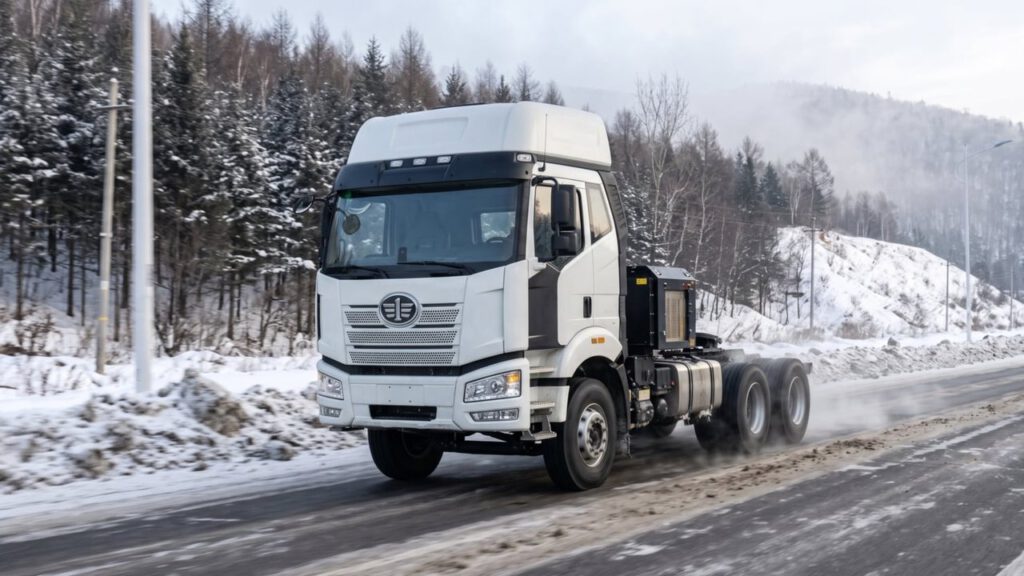
Hina lists a gravimetric energy density of at least 145 Wh/kg and an operating range of minus 40 to 80 degrees Celsius for its sodium-ion products. In June 2026, an electric FAW Jiefang J6P tractor equipped with a 339 kWh Hina battery completed nearly seven months of testing and more than 15,000 km. FAW Jiefang reported that the battery retained more than 90% of its usable capacity at minus 40 degrees Celsius.
Hina plans 10 GWh sodium-ion battery base in Wuhan
Specified lithium-ion batteries face 2% from September 1, 2026 and 4% from September 1, 2027; qualifying sodium-ion batteries are exempt through December 31, 2028.
Both vehicle entries are neutral; GB/T 48072-2026, published August 28 and effective March 1, 2027, covers stationary storage only.
In August, Hina and Tonly Heavy Industries delivered an electric mining truck with a 676 kWh sodium-ion battery system to a mine in Hebei Province. The deployments demonstrate the chemistry’s use in heavy-duty applications, although its lower energy density and hard-carbon anode processing costs remain commercial considerations.
China is also developing technical requirements for the chemistry. GB/T 48072-2026, published on August 28, specifies safety requirements for sodium-ion cells and batteries used in stationary electrical energy storage systems. It takes effect on March 1, 2027, but does not serve as an electric vehicle approval standard.
Source: CarNewsChina.com