
Humanoid robots are emerging as a likely early application for solid-state batteries, as battery makers and robot developers look for systems that can support higher performance even at a premium cost. Samsung SDI has identified humanoid robots as a strong candidate for its first solid-state battery commercialization project, and Ecopro has also indicated that robots may adopt the technology before electric vehicles do. The interest reflects the ability of the robot market, especially high-value models, to absorb higher battery costs more easily than the automotive market.
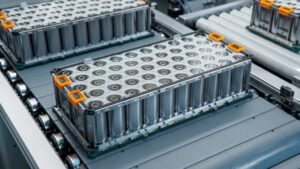
Industry observers note that high-energy-density batteries are especially important for humanoids because added battery weight increases the overall load on the robot’s motors and actuators. Ecopro recently said through its internal communication channel that high-nickel ternary batteries, which offer high energy density, are likely to outperform lithium iron phosphate batteries in humanoid applications. Solid-state batteries are also being viewed as a potential fit for robots because they offer higher performance, though their cost remains significantly above conventional lithium-ion products. Market research firm SNE Research has estimated solid-state battery prices at about $400 to $600 per kWh, compared with $81 for an LFP pack and $128 for a nickel cobalt manganese pack.
Battery supply chains are also being prepared. EcoPro BM has secured proprietary process technology for sulfide-based solid electrolytes and is operating a pilot plant with annual capacity of 40 tons. The company said products from the pilot line have passed quality verification by major battery companies and that trial production with key customers is under review. Its earliest mass production target is 2027.
Among cell makers, Samsung SDI is targeting mass production in the second half of 2027 and said humanoids are highly likely to be its first commercialization area. LG Energy Solution is targeting 2029 for graphite-based solid-state batteries for electric vehicles and 2030 for an anode-free version aimed at next-generation devices such as humanoids. SK On has also advanced its commercialization timeline from 2030 to 2029.
For now, major robots still rely mainly on lithium-ion batteries. Samsung SDI is working with Hyundai Motor and Kia on robot-specific battery development, while LG Electronics has formed a robotics business center and is advancing the LG CLOiD humanoid through production for proof-of-concept validation.
The humanoid market is expected to expand rapidly. Goldman Sachs projects global humanoid robot market growth to $38 billion by 2035, with annual shipments exceeding 1.4 million units.
Source: BusinessKorea