

Morocco will host Africa’s first battery gigafactory following a $5.6 billion investment from China’s Gotion High-Tech. The facility, located in Kenitra in northwest Morocco, is scheduled to begin production in the third quarter of 2026 with an initial annual capacity of 20 gigawatt-hours (GWh). Over the course of five development phases, capacity is expected to expand to 100 GWh.
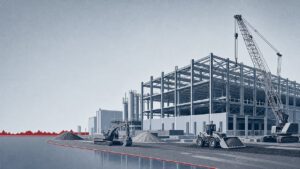
Construction preparations, including site earthworks, have already been completed. In its first phase, the gigafactory will create about 2,300 direct jobs. As the project advances to full scale, total employment is projected to reach around 10,000 positions. The factory will produce complete battery cells along with key electrode materials—cathodes and anodes.
The plant’s primary export market will be Europe, supplying automakers and complementing Morocco’s existing auto cluster, which includes manufacturers such as Renault and Stellantis. It will also target energy storage installations in Africa and the Middle East, where solar resources are abundant and demand for renewable integration is growing.
By establishing a vertically integrated cell production hub, Morocco aims to reduce reliance on imported battery components, strengthen regional supply chain security, and capture greater value from its clean energy transition. In 2024, Morocco’s automotive industry posted record exports of 157 billion Moroccan dirhams, with roughly 85% of output destined for the European Union.
The gigafactory reflects China’s increasing footprint in Africa’s industrial sector, combining infrastructure finance with advanced manufacturing initiatives. Other Chinese firms—including BTR, CNGR, and Hailiang—have also announced investments in Morocco’s battery ecosystem. Industry observers suggest this project could serve as a blueprint for other African nations rich in critical minerals such as cobalt, copper, and lithium, enabling them to move up the value chain from raw material suppliers to high-tech producers.
Source: Business Insider Africa