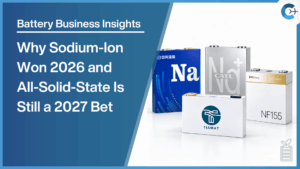


Beijing Automotive Group Co. (BAIC Group) has announced the development of a prototype sodium-ion battery that has reached industry-leading performance levels, marking an expansion of its next-generation power battery efforts. The company said the new cell complements its existing Aurora Battery platform, which now includes lithium-ion, solid-state and sodium-ion chemistries to support a variety of applications.
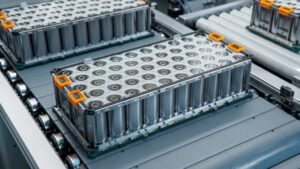
Designed in a prismatic format, the prototype cell achieves an energy density exceeding 170 watt-hours per kilogram, ranking it among the highest-performing sodium-ion cells currently in development. The battery pack also supports a 4C fast-charging capability, enabling a full recharge in approximately 11 minutes under ideal conditions, according to BAIC.
Beyond energy density and charging speed, BAIC highlighted the cell’s robust performance in extreme temperatures. The battery can operate stably between –40 °C and 60 °C, maintaining over 92% of its rated energy output at –20 °C. In safety tests—including overcharging, prolonged heating and mechanical impact—the pack showed no fire or explosion, surpassing existing national safety standards.
BAIC’s research team has finalized the cell’s prototype design and established a mass-production process for the prismatic modules. The company has filed around 20 patent applications covering key areas such as electrode materials, electrolyte formulations and system integration techniques.
This announcement positions BAIC within a growing field of Chinese automakers and battery suppliers pursuing sodium-ion technology as a cost-effective alternative to conventional lithium-ion cells. Similarly, another leading Chinese manufacturer has reported that its third-generation sodium-ion platform has reached a projected cycle life of 10,000, underscoring the technology’s potential in both automotive and stationary energy storage markets.
Source: CNEV Post