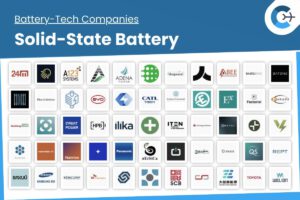


China’s solid-state battery race is intensifying, with several battery makers and automakers lining up trial production timelines around 2027. Farasis Energy, CALB, and Volkswagen-backed Gotion High-Tech have all said they plan to move into trial production and real-world road testing of solid-state batteries in 2027. Their announcements come after recent updates from BYD and CATL, both of which have also pointed to 2027 as a key milestone for solid-state battery trials. Geely has separately outlined a similar schedule, targeting trial production and real-world validation of its 500 Wh/kg solid-state cells in 2027, with the goal of enabling EVs with diesel-like driving range.
The push is taking place against the backdrop of China’s New Energy Vehicle Industry Development Plan (2021-2035), which was introduced in 2020 and includes accelerating the development and commercialization of solid-state batteries.
According to Libattery.net, CALB plans to begin small-scale EV validation in 2027 and expects to ramp up solid-state battery production between 2030 and 2032. Gotion High-Tech is focusing on 350 Wh/kg cells, with road tests and small-scale vehicle installations planned for 2027 and full commercial production targeted for 2029 to 2030. Farasis Energy is also aiming for EV validation in 2027, with full-scale commercial production expected in 2030.
EVE Energy said it has developed sulfide-based solid-state cells in the amp-hour range. The company plans to present first-generation cells with up to 350 Wh/kg and 800 Wh/L in 2026, followed by second-generation cells with 1,000 Wh/L in 2028.
China EV DataTracker says CATL remains China’s largest battery maker with a 42.9% market share, while BYD ranks second with 19.5%. CALB, Gotion, and EVE round out the next three positions. The top four battery makers together hold more than 75% of the market, and each has committed to the 2027 trial-production timeline.
Dreame Technology, best known for its home appliances, has also disclosed solid-state battery plans. It says its Galaxy Crystal cells can reach more than 450 Wh/kg, with small-scale deliveries planned for 2026 and full commercial production in 2027.
Source: CarNewsChina