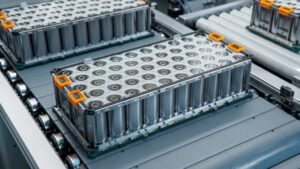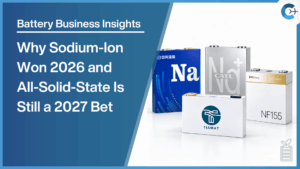


China’s decision to reinstate a consumption tax on lithium-ion batteries is poised to accelerate automakers’ efforts to produce their own cells, according to Cui Dongshu, secretary-general of the China Passenger Car Association (CPCA). In a joint announcement on July 17, China’s Ministry of Finance, General Administration of Customs and State Taxation Administration said a 2% consumption tax will apply to mature battery products starting September 1, 2026. That rate will rise to 4% on September 1, 2027. In contrast, emerging technologies such as sodium-ion and solid-state batteries will remain exempt from the levy through the end of 2028.
Cui described the policy shift as a key milestone in aligning tax treatment for electric and fuel-powered vehicles, marking the gradual phase-out of previous incentives for new energy vehicles. He argued that automakers relying on externally sourced battery cells will face higher costs, while those manufacturing cells in-house can either avoid or deduct the consumption tax entirely.
Citing industry data, Cui noted that battery makers have captured a disproportionate share of profits. In 2025, he pointed out, a top battery supplier recorded net profits of 72.2 billion yuan—exceeding the combined earnings of multiple major automakers. Meanwhile, China’s auto sector reported a sales profit margin of just 3.4% in the first five months of 2026, one of its lowest levels on record.
At current cell prices of roughly 0.35 to 0.40 yuan per watt-hour, a 2% tax equates to an incremental cost of about 0.007 to 0.008 yuan per watt-hour. While the impact per vehicle may be modest, automakers building a million cars annually could see cumulative tax expenses rise into the hundreds of millions of yuan.
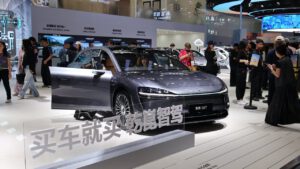
With batteries accounting for roughly a quarter of a vehicle’s cost, Cui emphasized that mastering core cell technology is essential for long-term competitiveness. He highlighted companies already advancing in-house production capabilities, and said the tax exemptions for next-generation batteries offer a policy window to accelerate development of sodium-ion and solid-state cells.
Amid record sales—new energy vehicles made up 54% of China’s passenger car market in the first half of 2026—and a 12% year-on-year increase in power-battery installations, automakers that secure in-house battery capacity are likely to gain a significant advantage in the evolving market landscape.
Source: CNEV Post