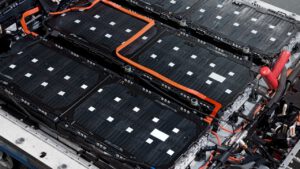


Coreshell Technologies will use a $50 million U.S. Department of Energy award to expand domestic battery manufacturing and build what the company describes as the first U.S. gigafactory dedicated to lithium-ion cells with anodes made entirely from metallurgical silicon. The San Leandro, California-based battery-tech company said the project is intended to reduce reliance on graphite by replacing it with metallurgical-grade silicon, a material that can be sourced in the United States.
According to Coreshell, graphite remains a major supply chain vulnerability, with more than 93% of global supply concentrated in China. The company said the planned manufacturing site will support about 2 gigawatt-hours of electrode manufacturing capacity and 1.5 gigawatt-hours of cell assembly capacity. More than 100 jobs are expected to be created across production, technical, and administrative roles as construction and equipment installation move forward.
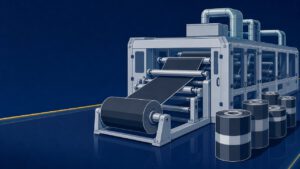
Coreshell is pairing its silicon-anode technology with a dry-coating process developed by Massachusetts-based AM Batteries. The companies said the approach removes graphite from the anode while reducing the equipment and energy requirements associated with conventional wet electrode manufacturing. AM Batteries will also provide its Powder-to-Electrode process for cathodes. Unlike traditional wet coating methods, the dry process eliminates solvents and the need for energy-intensive drying and solvent-recovery systems, which could lower capital and operating costs while reducing manufacturing safety risks.
The company said the cells are being designed to meet National Defense Authorization Act requirements, allowing them to serve both electric vehicle applications and specialized military uses. Coreshell also noted that U.S. producers already manufacture more than 100,000 tons of metallurgical silicon annually, creating a domestic feedstock for the planned battery production.
Coreshell CEO and co-founder Jonathan Tan said the project is intended to demonstrate that domestically sourced metallurgical silicon can replace graphite at scale and help give U.S. automotive and defense industries access to energy storage that is less dependent on foreign supply chains. AM Batteries CTO Hieu Duong said the collaboration aims to produce a high-performance battery cell that can compete on cost with mass-market cells from Asia.
The $50 million award was provided under the Infrastructure Investment and Jobs Act through the DOE’s Manufacturing Deployment Office.
Source: Interesting Engineering