
Geely Holding Group Chairman Eric Li has warned that the mismatch between electric vehicle and battery lifespans could make otherwise usable older EVs uneconomical to maintain. Speaking alongside Nio founder and CEO William Li at the 2026 World Internet Conference on November 5, Eric Li said the issue has not yet emerged at scale because China’s EV market remains relatively young.
William Li described a scenario in which a vehicle reaches 10 years or 200,000 km but has another five or six years of potential use. Battery deterioration at that stage could reduce usability and resale value.
China’s recommended national standard GB/T 46991.1-2025, which took effect on July 1, 2026, sets minimum State of Available Energy retention levels for M1 and M2 vehicles. The benchmarks are 82% after five years or 100,000 km, 75% after eight years or 160,000 km, and 70% after 10 years or 200,000 km. Lower thresholds apply to battery-electric vehicles with certified ranges of 220 km or less.
Three-year-old EVs retain around 45% of original value
A three-year-old EV retained around 45% of original value, down from nearly 55% in 2023, as battery condition weakens older-EV economics.
Earlier tests occur at five years or 100,000 km and eight years or 160,000 km; display deviation is limited to 5%.
Battery concerns are also affecting China’s used-EV market. A report citing International Energy Agency data said around four out of five surveyed used-car dealers in China refused fully electric vehicles older than five years. China Automobile Dealers Association figures showed that a three-year-old EV retained around 45% of its original value, down from nearly 55% in 2023.
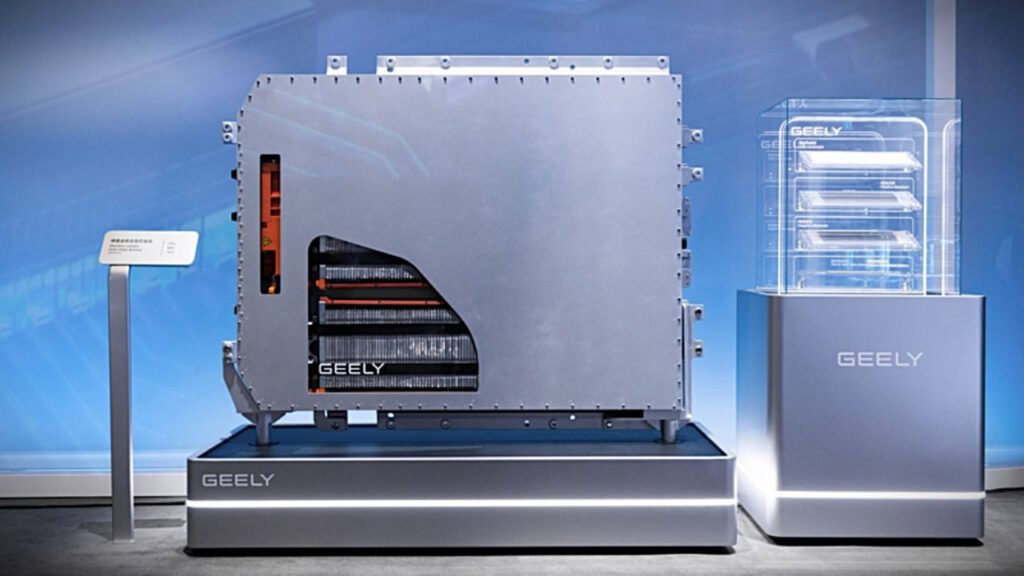
An engineer at CATL’s Ning Service Shanghai center estimated a typical full battery-pack replacement at around 100,000 yuan, compared with 10,000–20,000 yuan for repairs at the center. Repair feasibility depends on pack design, damage and compatible components. Cell-to-Pack construction can make disassembly and individual cell replacement more complicated.
The comments come as Geely and Nio expand battery-swapping cooperation. Under a September 28 agreement, Geely will contribute its Yiyi Power business and 640 million yuan for a 30% stake in Nio Power, subject to regulatory clearance and completion. Nio reported 4,126 swap stations and more than 125 million completed battery swaps in China as of September 27, 2026.
Source: CarNewsChina.com