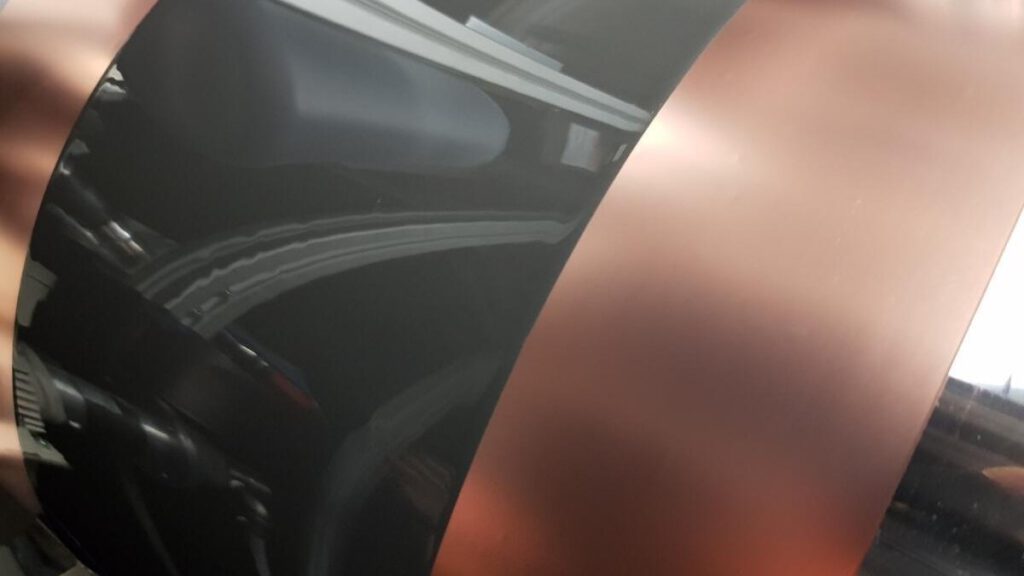

PEM of RWTH Aachen University announced on October 5, 2026, that it is working on the ProMeBa research project, which focuses on the systematic development, optimization, and scaling of wet-chemical multilayer coating processes for battery electrodes.
The project will investigate slot-die coating for multilayer application and multilayer curtain coating under industrially relevant roll-to-roll conditions. It will also further develop an inline measurement system for determining viscosity, with the goal of supporting quality assurance during electrode coating.
According to PEM Chair Achim Kampker, multilayer electrodes could enable battery cells to combine higher performance and longer lifetimes with greater resource efficiency. He said the central challenge is translating these approaches into production processes that are both reproducible and scalable.
Within ProMeBa, PEM is responsible for key work on formulation and process development for multilayer anodes. The institute will also characterize the resulting electrodes at laboratory scale before transferring its findings to pilot-scale trials. The work is intended to connect material, process, and equipment development across electrode manufacturing.
PEM Executive Board Member Heiner Heimes said the project is intended to establish the basis for a drop-in-capable technology that can extend existing production infrastructure in a targeted way. This approach would allow multilayer coating processes to be integrated with established manufacturing equipment.
NETZSCH-Gerätebau GmbH is coordinating the project. Alongside PEM, the participating organizations are the Institute ISEA of RWTH Aachen University, the Fraunhofer Institute for Ceramic Technologies and Systems IKTS, the Institute for Particle Technology at Technische Universität Braunschweig, and 8inks Deutschland.
Source: pem.rwth-aachen.de