

On August 7, 2026, Sila announced it has received a conditional loan commitment of up to $1.4 billion from the United States Department of War’s Office of Strategic Capital. The financing is intended to expand production of the company’s advanced silicon-carbon (Si/C) anode materials at its Moses Lake, Washington facility and to support the construction of a lithium-ion battery cell manufacturing line. This commitment follows a recent $300 million equity round led by Sutter Hill Ventures and Atreides Management.
U.S. supply chains currently rely heavily on overseas sources for critical battery materials and cells, with more than 90 percent of anode processing and over 80 percent of cell production based outside the country. That dependence poses a risk to domestic manufacturers of defense and aerospace systems in the event of trade disputes or export restrictions. By scaling gigawatt-hour-level production of its Titan Silicon® Si/C anode technology at home, Sila aims to strengthen U.S. technology sovereignty and secure supply for strategic industries.
“Sila solved the hardest problem in battery materials with the invention of the modern silicon anode,” said CEO Gene Berdichevsky. “Moving from invention to large-scale domestic manufacturing demonstrates that we can achieve supply chain security for critical technology sectors.”
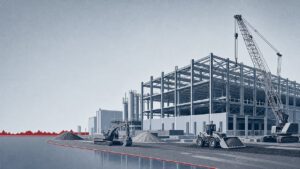
The Department of War’s conditional loan is earmarked for deploying Sila’s next-generation modular production lines at Moses Lake, which are designed for rapid scale-up. Part of the funding will also support a dedicated silicon battery cell facility tailored to high-performance applications such as industrial, agricultural, and military drones. As global battery demand outside China is projected to triple over the next five years, Sila remains the only advanced materials company in North America operating at gigawatt-hour scale.
Before the loan is finalized, Sila must satisfy certain technical, financial, and legal requirements. The company, founded in 2011, began commercializing its Si/C anode in 2021 and now addresses power needs across drones, satellites, robotics, electric vehicles, and AI data centers with U.S.-based manufacturing in Moses Lake.
Source: Sila Nano