

AM Batteries announced that it is serving as a core subrecipient of a $50 million award from the U.S. Department of Energy’s Manufacturing Deployment Office under the Infrastructure Investment and Jobs Act. The project is led by Coreshell Technologies and is intended to expand domestic battery manufacturing capacity in the United States.
According to the companies, the initiative aims to build approximately 2 gigawatt-hours of electrode manufacturing capacity and 1.5 gigawatt-hours of cell assembly capacity. The effort is also expected to support the creation of more than 100 jobs across production, technical, and administrative roles, while strengthening a more resilient U.S. battery supply chain.
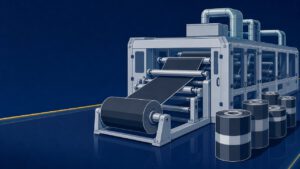
AM Batteries will contribute its dry-coating process for cathode manufacturing through its Powder to Electrode™ platform. The company says the approach eliminates energy-intensive solvent-based wet coating and removes the need for toxic solvent-recovery infrastructure. By replacing traditional wet-slurry casting, the dry-electrode process is designed to simplify battery production and reduce both capital and operating costs.
The company said its technology, combined with advanced material integration, is intended to support lower-cost, higher-performance cells for domestic electric vehicle and defense applications. AM Batteries also said the dry-electrode process can reduce capital expenditures for electrode manufacturing by up to 40%, cut operating expenses by more than 50%, and lower the carbon footprint of battery plants.
“This project is about proving that a 100% domestically produced high-performance battery cell can be cost-competitive with mass-market cells from Asia.” said Hieu Duong, CTO of AM Batteries. “The U.S. will not win by simply replicating existing technologies or the status quo; we must create fundamental advantages in manufacturing and materials. By combining AMB’s platform with Coreshell’s MGS anode technology, we can lower cost, improve performance, and help build a globally competitive battery industry in the West.”
Coreshell Technologies develops batteries designed to reduce dependence on Chinese critical minerals. Its technology uses metallurgical silicon in place of conventional graphite in lithium-ion battery anodes, with the company saying this can improve performance while supporting a domestic supply chain.
Source: Fuel Cells Works